There are no products to list in this category.
Can Sound Cleaning Replace Chemical Disinfection?
Posted By Tattmall on Saturday 15th August 2026
Can Sound Cleaning Replace Chemical Disinfection?
Ultrasonic cleaning can improve the cleaning of reusable tattoo equipment, but it should not be treated as a complete replacement for validated disinfection or sterilization. This distinction is especially important in the United States, where professional tattoo studios must manage equipment that may come into contact with blood and other biological material. Ultrasonic cleaners use high-frequency sound waves to create microscopic bubbles in a cleaning solution. The resulting cavitation helps loosen ink residue, tissue debris, and other contaminants from difficult-to-reach surfaces. However, cleaning and sterilization are different processes. CDC guidance identifies ultrasonic cleaners as useful mechanical cleaning equipment, while emphasizing that effective reprocessing begins with thorough cleaning and may then require appropriate disinfection or sterilization depending on the item. A tattoo pen machine therefore needs a cleaning strategy based on the specific component and the manufacturer's instructions rather than simply relying on ultrasonic treatment.
Ultrasonic cleaning works mainly by removing contamination rather than reliably sterilizing equipment. During an ultrasonic cycle, high-frequency sound waves create and collapse microscopic bubbles in a liquid. This process produces localized mechanical action that can reach grooves, joints, and other difficult areas. For tattoo equipment, this can be useful for removing dried pigment and organic debris from compatible reusable components. CDC materials specifically recognize ultrasonic cleaners as automated cleaning equipment that can help remove debris and improve cleaning effectiveness. However, the fact that an ultrasonic cleaner removes visible contamination does not mean that all microorganisms have been eliminated. A professional tattoo pen machine must therefore be separated into components that can safely be cleaned and components that should not be immersed.
The most important difference is cleaning versus sterilization. Cleaning physically removes soil and organic material, while disinfection reduces microorganisms to a specified level and sterilization is intended to eliminate all forms of microbial life, including highly resistant bacterial spores. CDC guidance notes that cleaning is an essential first step because organic and inorganic material can interfere with subsequent disinfection or sterilization. This means an ultrasonic cleaner can be valuable as part of a reprocessing workflow, but it should not automatically replace the validated sterilization method required for a reusable item that needs to be sterile.
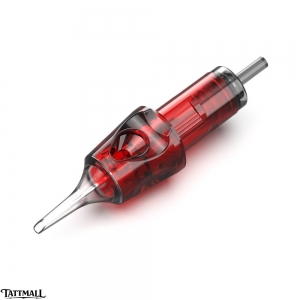
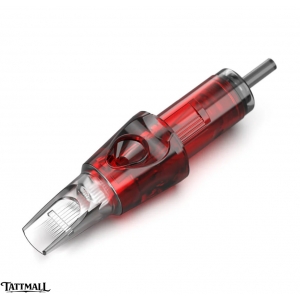
For reusable tattoo components, the correct workflow depends on what the component is designed to withstand. Some reusable metal components may be compatible with ultrasonic cleaning followed by rinsing, drying, packaging, and steam sterilization. Historical CDC research into tattoo and piercing facilities documented the use of ultrasonic cleaning for reusable tattoo instruments followed by rinsing, drying, packaging, and autoclave sterilization. (CDC Stacks) By contrast, many modern cartridge needles are designed for single use and should not be treated as reusable merely because an ultrasonic cleaner can remove visible residue. Artists should always follow the manufacturer's labeling and applicable local requirements.
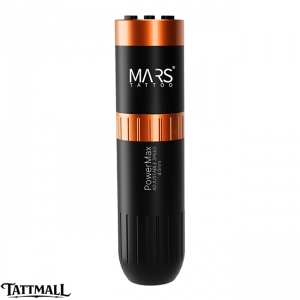
A tattoo machine itself generally should not be placed directly into an ultrasonic bath unless the manufacturer specifically permits it. A modern rotary tattoo machine may contain a motor, bearings, electronics, seals, sensors, display components, or a rechargeable battery. Immersion can allow liquid to enter areas that were never designed for fluid exposure, potentially causing corrosion, electrical failure, lubricant displacement, or permanent damage. This is particularly relevant for a wireless tattoo pen machine, where the battery and electronic control system are integrated into a compact body. In most cases, the machine body should be protected from contamination using appropriate barriers and cleaned according to the manufacturer's instructions rather than submerged.
Ultrasonic cleaning is most valuable when mechanical cleaning is difficult. Traditional manual cleaning may struggle to reach narrow grooves, threads, textured surfaces, or internal areas of compatible reusable instruments. Ultrasonic cavitation can provide additional mechanical action and reduce the amount of manual scrubbing required. It may also reduce direct handling of contaminated instruments, which can improve worker safety when appropriate procedures are followed. CDC guidance recognizes automated cleaning equipment as a way to improve cleaning effectiveness and reduce worker exposure to blood and body fluids. For a professional tattoo studio, this makes ultrasonic cleaning a useful supporting technology rather than a standalone sterilization solution.
Chemical disinfectants still have an important role when the equipment and surface require disinfection. CDC guidance describes multiple chemical disinfectant categories and emphasizes that the choice of product, concentration, and contact time depends on the infection risk and equipment involved. (CDC Stacks) The correct product should therefore be selected according to its labeled indications and the equipment manufacturer's compatibility instructions. Simply adding a chemical disinfectant to an ultrasonic cleaner does not automatically make the process equivalent to a validated sterilization cycle. Chemical exposure can also damage plastics, seals, coatings, electronics, or other materials if the product is incompatible.
Ultrasonic cleaning and chemical disinfection can sometimes work together rather than compete with each other. A logical reprocessing workflow may use mechanical cleaning to remove visible contamination first, followed by an appropriate validated disinfection or sterilization method when required. Removing organic material before the next processing stage is important because contamination can interfere with the effectiveness of subsequent processes. For tattoo professionals, this means the better question is not “ultrasonic cleaning or chemical disinfection?” but rather “which processing steps are appropriate for this specific reusable component?”
Manufacturer instructions should determine how a tattoo machine and its accessories are processed. FDA guidance for reusable devices emphasizes that when a device is intended to be sterilized by the user, labeling should identify a validated sterilization method and provide sufficiently detailed instructions. It also highlights the need to consider special cleaning methods, potential changes caused by reprocessing, and limits on reuse or resterilization. (U.S. Food and Drug Administration) This principle is highly relevant when choosing cleaning equipment for a modern tattoo machine. A studio should not assume that a material is compatible with ultrasonic cleaning, chemical disinfectants, or autoclaving simply because it appears durable.
Ultrasonic cleaning can also contribute to longer equipment life when used correctly. Dried pigment and organic residue can accumulate around reusable components and make routine maintenance more difficult. Effective cleaning can help keep compatible parts free from buildup, but aggressive or inappropriate ultrasonic treatment can have the opposite effect. Excessive exposure, unsuitable solutions, incorrect temperatures, or cleaning components that should not be immersed may damage delicate surfaces. For this reason, professional artists should treat ultrasonic cleaning as a controlled maintenance process rather than simply using the strongest or longest cycle available.
The future of tattoo equipment cleaning may combine ultrasonic technology with smarter reprocessing systems. Manufacturers could potentially develop dedicated cleaning systems with controlled temperature, cycle time, solution monitoring, and component-specific programs. Such systems may help studios standardize cleaning and reduce operator error. However, technological sophistication does not remove the need for validated sterilization where sterile reusable equipment is required. The key objective should remain reliable infection control rather than simply reducing chemical use.
Reducing chemical use can have environmental and occupational advantages, but safety must come first. Ultrasonic cleaning may reduce dependence on aggressive manual scrubbing and can improve the efficiency of mechanical soil removal. It may also help studios manage certain cleaning tasks with less direct handling of contaminated instruments. Nevertheless, eliminating chemical disinfection or sterilization solely for environmental reasons would be inappropriate if the resulting process does not provide the required level of microbial control. Sustainable tattoo equipment practices should combine efficient cleaning, appropriate chemical use, responsible waste management, and validated sterilization rather than removing one safety-critical step.
For American tattoo studios, the most practical approach is to use ultrasonic cleaning as one part of a complete equipment-processing system. Artists should identify which components are single-use, which are reusable, which can be immersed, and which require special cleaning or sterilization procedures. Reusable instruments should be processed according to their validated instructions, while machine bodies and electronic components should generally be protected from contamination and cleaned using compatible surface methods. A professional tattoo pen machine can benefit from good cleaning and maintenance practices, but no cleaning technology should be assumed to provide sterilization without appropriate validation.
In conclusion, ultrasonic cleaning cannot generally replace chemical disinfection or sterilization simply because it uses sound instead of chemicals. Its primary value is mechanical cleaning and removal of contamination, particularly from compatible reusable components with difficult-to-reach surfaces. CDC guidance supports ultrasonic cleaning as an automated cleaning method, while emphasizing the importance of subsequent appropriate processing when disinfection or sterilization is required. For modern tattoo equipment, the safest strategy is to combine ultrasonic cleaning where appropriate with manufacturer-approved disinfection or sterilization procedures. As tattoo pen machine technology becomes more sophisticated, cleaning systems will likely become smarter too—but infection-control principles should remain the foundation of every professional tattoo workflow.
FAQ
1. Can an ultrasonic cleaner sterilize tattoo equipment?
Not automatically. An ultrasonic cleaner primarily performs mechanical cleaning by removing debris and contamination. It should not be assumed to achieve sterilization unless a specific system and process has been appropriately validated for that purpose.
2. Can I put my tattoo pen machine directly into an ultrasonic cleaner?
Usually, you should not. Wireless tattoo machines may contain batteries, motors, electronics, seals, and other components that can be damaged by immersion. Always follow the manufacturer's cleaning instructions before exposing any machine component to liquid.
3. Should reusable tattoo equipment be ultrasonically cleaned before autoclaving?
When the equipment is designed for this workflow, ultrasonic cleaning can be useful as a pre-cleaning step. The component must then be rinsed, dried, packaged, and sterilized according to the applicable validated procedure and manufacturer instructions.
4. Can ultrasonic cleaning replace chemical disinfectant?
Not in general. Ultrasonic cleaning and chemical disinfection perform different functions. Ultrasonic cleaning removes contamination mechanically, while an appropriate disinfectant may be needed for surfaces or equipment requiring disinfection.
5. Is ultrasonic cleaning useful for professional tattoo studios?
Yes, when used correctly. It can improve cleaning of compatible reusable instruments and reach difficult areas more effectively than some manual methods. However, it should be integrated into a complete infection-control workflow rather than treated as a replacement for required sterilization.
-300.jpg "MARS Stroke Mini Wireless Tattoo Machine 2.5/2.9/3.3/3.7mm Stroke (Dual Batteries)")