There are no products to list in this category.
Dual-Mode Smart Tattoo Machines
Posted By Tattmall on Friday 26th June 2026
Dual-Mode Smart Tattoo Machines
Dual-mode smart tattoo machines are redefining the workflow of professional tattoo artists by combining multiple operating modes into a single intelligent device. As tattoo technology continues to evolve across Europe and North America, artists expect more than stable motors and ergonomic designs. They now demand intelligent switching, personalized settings, wireless connectivity, and adaptive performance. Modern
professional tattoo machines
increasingly feature dual-mode operating systems that allow users to switch seamlessly between different working configurations depending on tattoo style, needle grouping, skin type, and personal technique. Understanding how this switching logic works helps artists maximize efficiency while maintaining consistent tattoo quality.
The concept of dual-mode operation is based on adapting machine behavior rather than changing the machine itself. Unlike traditional tattoo machines that operate with fixed parameters, smart models allow users to alternate between two predefined performance profiles. These profiles may include different voltage ranges, motor response curves, stroke behaviors, acceleration characteristics, or needle impact frequencies. Some manufacturers label them as Lining Mode and Shading Mode, while others refer to them as Precision Mode and Power Mode. Regardless of the naming convention, the purpose remains the same: enabling a single machine to perform multiple tattooing tasks without requiring hardware changes. Many premium rotary tattoo machines now integrate intelligent firmware that automatically adjusts output according to the selected operating mode.
One of the primary switching scenarios involves transitioning between lining and shading. Fine outlines require stable needle movement, rapid motor response, and consistent penetration depth. During lining, the machine typically maintains a firm output with minimal fluctuation, allowing artists to create crisp and continuous lines. Once the outline is complete, the artist can switch to shading mode, where the machine delivers smoother acceleration, softer needle impact, and more gradual power curves. This transition reduces unnecessary skin trauma while improving ink blending. In many professional tattoo machines, switching between these modes requires only a single button press or touchscreen selection, eliminating manual voltage adjustments throughout the session.
Intelligent switching also considers needle configurations and cartridge types. Different needle groupings place varying demands on the machine. Small round liners require fast response and precise control, while large magnum cartridges benefit from stronger torque and sustained power output. Advanced tattoo pen machines can recognize user-selected cartridge presets and automatically recommend suitable operating parameters. Some systems even store preferred settings for commonly used tattoo needle cartridges, enabling artists to switch between configurations quickly. This adaptive behavior improves workflow efficiency while reducing setup time during complex tattoos that require multiple needle combinations.
Modern smart control systems rely on sensors and software algorithms to optimize performance. High-end machines incorporate microprocessors that continuously monitor motor speed, battery voltage, load resistance, and operational stability. When artists switch between dual modes, the internal controller recalculates motor output in real time, ensuring that performance remains smooth and predictable. Rather than simply increasing or decreasing voltage, intelligent firmware modifies multiple operational variables simultaneously. This sophisticated control logic is one of the reasons why today's advanced rotary tattoo pens outperform many earlier-generation machines. Manufacturers of
professional tattoo machines
continue investing heavily in embedded software development to improve switching accuracy and overall tattoo consistency.
Wireless operation has expanded the possibilities of dual-mode functionality. Most premium cordless tattoo machines now include onboard memory capable of storing multiple customized performance profiles. Artists can create separate configurations for black-and-gray realism, traditional color packing, fine-line tattoos, cosmetic tattooing, or whip shading techniques. Switching between saved profiles takes only seconds, allowing uninterrupted workflow during long tattoo sessions. Some Bluetooth-enabled tattoo systems even synchronize presets with companion mobile applications, enabling cloud backup and profile sharing between multiple machines. These features are particularly attractive to professional studios where several artists use similar equipment while maintaining individual preferences.
Safety mechanisms play an essential role in the switching logic of intelligent tattoo machines. Abrupt changes in motor output could negatively affect tattoo quality or client comfort if not properly managed. To prevent sudden transitions, many smart machines introduce gradual power adjustments when switching modes. Instead of immediately jumping to the new settings, the controller smoothly increases or decreases motor performance over a fraction of a second. Additional protection systems monitor battery temperature, motor load, and electronic stability before completing the transition. If abnormal conditions are detected, the machine may temporarily delay switching or display a warning message. Such intelligent safeguards improve equipment reliability while protecting both artists and clients.
Customization is becoming one of the defining advantages of next-generation tattoo equipment. Many manufacturers now allow artists to rename custom profiles, adjust sensitivity levels, modify startup behavior, and fine-tune motor response curves. Some premium systems support firmware updates that introduce entirely new operating modes after purchase. As artificial intelligence and machine learning technologies mature, future tattoo machines may analyze an artist's working habits and automatically recommend optimized settings for specific tattoo styles. These developments are transforming traditional tattoo devices into highly personalized creative tools. Businesses specializing in professional tattoo machines, commercial tattoo equipment, and premium rotary tattoo systems increasingly emphasize intelligent software features alongside mechanical performance.
Dual-mode logic also improves efficiency for professional studios and equipment distributors. Instead of purchasing multiple specialized machines, artists can accomplish a wide range of tattooing tasks with a single intelligent device. This reduces equipment costs, simplifies maintenance, and minimizes workspace clutter. Studio managers benefit from standardized equipment while individual artists retain personalized operating profiles. Distributors serving European and North American markets recognize that intelligent switching technology has become a significant competitive advantage within the premium tattoo equipment sector. As customer expectations continue to rise, manufacturers are expected to expand dual-mode functionality into multi-mode adaptive operating platforms.
In conclusion, the switching logic of dual-mode smart tattoo machines represents an important advancement in modern tattoo technology. By combining intelligent software, adaptive motor control, personalized presets, and seamless operating transitions, these machines enable artists to work more efficiently without compromising precision or comfort. Whether changing from lining to shading, adjusting for different cartridge configurations, or loading customized performance profiles, today's professional tattoo machines deliver greater flexibility than ever before. As smart electronics, wireless connectivity, and embedded control systems continue to evolve, dual-mode technology is likely to become a standard feature in the next generation of professional tattoo equipment.
FAQ
1. What is a dual-mode tattoo machine?
A dual-mode tattoo machine allows artists to switch between two optimized operating profiles, such as lining and shading, without changing hardware.
2. Does switching modes require restarting the machine?
No. Most modern smart tattoo machines allow instant switching through a button, touchscreen, or mobile application.
3. Can dual-mode machines save personalized settings?
Yes. Many premium cordless tattoo machines can store multiple custom profiles for different artists and tattoo styles.
4. Are dual-mode tattoo machines suitable for beginners?
Yes. Preset operating modes simplify setup and reduce the need for manual parameter adjustments, making them easier to learn.
5. Will intelligent switching affect tattoo quality?
When properly implemented, intelligent switching improves consistency, enhances workflow efficiency, reduces skin trauma, and helps maintain stable machine performance throughout the tattooing process.
-300.jpg "MARS M1 Tattoo PEN Wireless Tattoo Machine 4mm Stroke (Dual Batteries)")
-300.jpg "MARS Power Max V1 Wireless Tattoo Machine 4mm Stroke (Dual Batteries)")
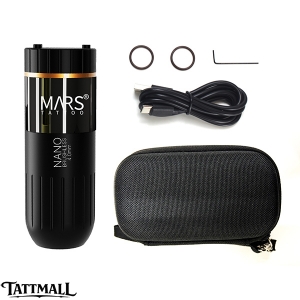
-300.jpg "MARS Intelli Wireless Tattoo Machine 4mm Stroke (Dual Batteries)")


