There are no products to list in this category.
How Do Tattoo Needles Work?
Posted By Tattmall on Friday 04th September 2026
How Do Tattoo Needles Work?
Tattoo needles work by moving rapidly in a controlled pattern to help place tattoo pigment into the skin during a professional tattoo procedure. Although the tattoo machine provides the mechanical motion, the needle configuration is the component that directly interacts with the skin and carries pigment into the working area. Modern tattoo equipment can use traditional needle-bar systems or cartridge-based designs, and the exact movement depends on the machine mechanism and setup. For artists and studios across Europe, understanding how
tattoo needles
work is useful for selecting compatible equipment, maintaining consistent performance, and matching needle configurations to different artistic techniques. Needle diameter, grouping, taper, cartridge construction, machine stroke, operating settings, and hand movement can all influence the final result.
The tattoo machine provides controlled mechanical movement, while the needle assembly transfers that movement to the working point. Rotary, pen-style, and other machine designs use different internal mechanisms, but their basic purpose is to create repeated movement of the needle system. In a cartridge-based setup, the cartridge is held securely inside a compatible grip or machine, allowing the internal needle assembly to move in and out. In more traditional systems, a needle bar is mechanically connected to the machine's moving components. The needle itself does not create power; it responds to the movement generated by the tattoo machine. This relationship means that stable machine performance and correct component compatibility are important for predictable needle movement.
Tattoo pigment is introduced through the repeated interaction between the moving needle and the skin. During tattooing, the needle passes through a small amount of pigment and then makes controlled contact with the skin. The artist manages the machine and hand movement so that pigment is placed at an appropriate depth when the procedure is performed correctly. The visual result depends on multiple factors rather than the needle alone. Machine settings, needle configuration, pigment properties, skin characteristics, artist technique, and movement speed can all influence line quality and saturation. Effective pigment placement is the result of a complete working system rather than a single needle specification. For this reason, professional tattooists usually select equipment based on the specific technique and design they are creating.
Needle grouping determines how multiple needle points work together during lining, shading, and colour application. A single tattoo needle assembly may contain several individual points arranged in a specific pattern. Round liner groupings are generally associated with outlines and detailed work, while round shaders may be used for controlled shading or smaller colour areas. Flat and magnum configurations provide broader contact patterns and are often selected for shading or colour work. The number of needle points and the spacing between them can influence the size of the working area and the way pigment is distributed. Different tattoo needle groupings are designed to support different levels of precision and coverage. This is why professional artists often use several configurations during one tattoo session rather than relying on a single needle type.
Needle diameter and taper influence the physical characteristics of a tattoo needle configuration. Diameter refers to the thickness of the individual needle, while taper describes the shape and length of the sharpened point. These characteristics can affect the way the needle feels during use and how it interacts with pigment and skin. Smaller and larger diameters may suit different working preferences, while taper variations can support different levels of precision and control. However, there is no universal rule stating that one diameter or taper is best for every tattoo. The most suitable needle specification depends on the artwork, equipment setup, technique, and artist preference. Product terminology may also vary between manufacturers, so technical specifications should always be reviewed carefully.
Cartridge technology has changed the way many professional artists use and replace tattoo needle configurations. Modern tattoo needle cartridges combine the needle assembly and supporting structure into a replaceable component that fits into a compatible grip or machine. This makes it easier to switch between different configurations without rebuilding the complete needle setup. An artist may move from a fine liner to a round shader or magnum cartridge as the tattoo progresses. Some cartridges also include internal membrane systems designed to help control fluid movement toward the machine. Reliable tattoo needle cartridges depend on stable construction, compatible dimensions, and appropriate use according to manufacturer instructions. Compatibility should always be confirmed because similar-looking cartridge systems may differ in tolerances or design.
In the middle of the tattooing process, controlled needle movement and artist technique work together to create the final visual effect. A machine can provide consistent mechanical motion, but the artist controls positioning, hand speed, angle, movement pattern, and the overall approach to lining or shading. For example, the same needle configuration can produce different results depending on whether the artist uses slower, controlled movements or broader shading motions. Machine stroke length and operating settings may also influence how the equipment responds. Professional use of tattoo needles requires understanding the relationship between machine movement, needle configuration, and manual technique. This combination of mechanical consistency and human control is one reason why professional tattooing cannot be reduced to simply choosing a particular needle size.
Needle stability and manufacturing quality are important because small variations can affect consistency during professional work. The individual points within a needle grouping should be aligned and securely assembled so that the configuration performs as expected. Poor construction, inconsistent spacing, damaged tips, or unstable cartridge components may affect precision and predictability. Professional artists and tattoo studios may therefore evaluate manufacturing standards, packaging quality, supplier reliability, and product consistency when purchasing tattoo consumables. High-quality needle assemblies are designed to provide repeatable performance rather than unpredictable variation. This can be particularly important for detailed work, where even small inconsistencies may become more noticeable.
Hygiene and correct handling are essential parts of how tattoo needles are used in professional environments. Needle products intended for single use should be handled according to manufacturer instructions and applicable local requirements. Packaging should be checked before use, and products with damaged or compromised packaging should not be considered ready for professional use. Used needles and cartridges should be treated as contaminated sharps and disposed of through appropriate procedures. Work surfaces and surrounding equipment must also be managed using suitable infection-control practices. Safe tattooing depends on the complete workflow, not only on the technical performance of the needle. Tattoo studios across Europe should remain aware that requirements may differ between countries or local jurisdictions.
The interaction between the tattoo machine and the needle system also affects artist comfort and workflow efficiency. A poorly matched cartridge or needle assembly may create instability, excessive resistance, or an inconsistent working feel. By contrast, compatible professional equipment can provide more predictable handling. Artists often develop preferred combinations of machines, grips, cartridges, and needle configurations based on their personal technique. The goal is not to find one universal tattoo needle, but to create a balanced equipment setup for specific types of work. Fine-line specialists, realism artists, traditional tattooists, and colour artists may therefore make very different equipment choices.
Tattoo needles also differ according to the artistic task they are expected to perform. Lining needles are generally selected for creating defined edges and detailed elements, while shading configurations are designed for broader tonal work. Magnum-style groupings can support larger areas of shading and colour saturation, while smaller round configurations may offer greater control in limited spaces. Cartridge needle systems make these changes easier to manage during professional sessions. Understanding the intended function of each needle type helps artists build a more efficient and flexible working setup. Rather than selecting products based only on size or price, professionals usually consider the relationship between the needle grouping, machine, design, and technique.
For European tattoo professionals, equipment selection should also include product information, supplier reliability, and responsible handling practices. Different countries and regions may apply different requirements to tattoo-related products and professional hygiene procedures. Artists and studio owners should therefore verify that the consumables they purchase are suitable for their intended market and use. Clear specifications, reliable packaging, and consistent product availability can make it easier to maintain a professional workflow. A well-organised tattoo supply system supports both artistic consistency and responsible studio management.
Future tattoo needle technology is likely to focus on improved precision, cartridge engineering, and manufacturing consistency. Advances in production methods may help manufacturers improve needle alignment, reduce variation, and create more stable cartridge systems. At the same time, artists continue to demand convenient product identification, broad machine compatibility, and reliable availability. Environmental concerns may also encourage manufacturers to reduce unnecessary packaging or improve material efficiency where this can be achieved without compromising hygiene or product performance. The future of tattoo needle design will depend on balancing innovation, precision, safety, and practical usability.
In conclusion, tattoo needles work as the direct link between the tattoo machine's mechanical movement and the artist's creative technique. The machine generates controlled motion, while the needle configuration carries that movement into the working area. Grouping, diameter, taper, cartridge construction, machine settings, and artist technique all contribute to the final result. Understanding these factors helps professionals select appropriate equipment for lining, shading, detail work, and colour application. For studios and artists across Europe, tattoo needles should be viewed as part of a complete professional system that includes compatible equipment, responsible handling, consistent manufacturing quality, and skilled artistic control.
FAQ
1. Do tattoo needles move by themselves?
No. Tattoo needles do not generate their own power. The tattoo machine creates mechanical movement, which is transferred to the needle assembly or cartridge.
2. How fast do tattoo needles move?
The speed depends on the tattoo machine, its operating settings, and its mechanical design. Different machines and configurations can produce different movement characteristics.
3. How do tattoo needles hold tattoo pigment?
The needle passes through or works in contact with tattoo pigment, and controlled movement helps carry pigment into the skin during the tattooing process. The exact result depends on equipment, technique, and other working conditions.
4. Does a larger needle grouping always cover more skin?
Generally, a larger grouping can provide a broader working area, but coverage also depends on needle arrangement, artist technique, and machine performance. Larger is not automatically better for every type of tattoo.
5. Can one tattoo needle type be used for every tattoo?
Related Products
-
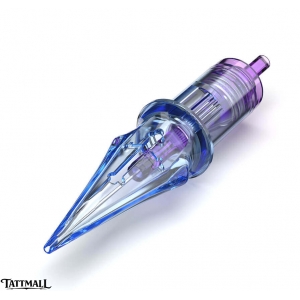
The King's Swords 304 Stainless Steel Round Liner RL Tattoo Cartridge Needles 20PCS
-
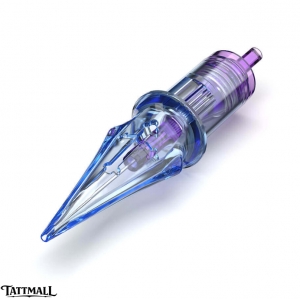
The King's Swords 304 Stainless Steel Round Shader RS Tattoo Cartridge Needles 20PCS
-
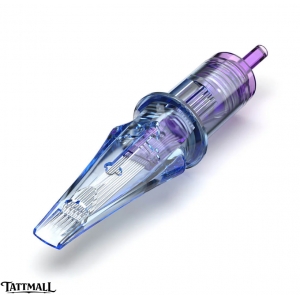
The King's Swords 304 Stainless Steel Round Magnum RM Tattoo Cartridge Needles 20PCS
-
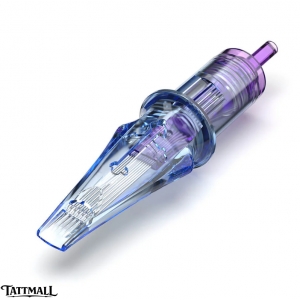
The King's Swords 304 Stainless Steel Weaved Magnum M1 Tattoo Cartridge Needles 20PCS


