There are no products to list in this category.
Magnum Tattoo Needles: Uses And Guide
Posted By Tattmall on Tuesday 22nd September 2026
Magnum Tattoo Needles: Uses & Guide
Magnum tattoo needles are primarily used for shading, color packing, gradients, and covering larger tattoo areas efficiently. Unlike round liner configurations, which concentrate needle points into a tight circular group, magnum configurations use multiple needles arranged across a wider working surface. This allows artists to distribute pigment over a broader area with each controlled movement. Magnum cartridges are therefore common in black-and-grey, realism, traditional, neo-traditional, Japanese, and color tattooing. They are especially useful when an artist needs more coverage than a round shader can provide. Understanding how different magnum configurations work is important when choosing cartridges and building a complete tattoo machine setup. (TattooBase)
What Is a Magnum Needle?
A magnum is a multi-row needle configuration designed to cover more surface area than round liners or round shaders. The needles are generally arranged in two rows, creating a wider contact area that can hold and distribute more pigment during a pass. The exact construction varies by configuration: M1 commonly refers to a standard or weaved magnum, while other products may use M2 for stacked magnums and RM or CM for curved or round magnums. Because naming conventions can vary between manufacturers, artists should check the manufacturer's specification rather than assuming that every brand uses identical terminology. (R&G BioTech)
The number before the configuration indicates the needle count. For example, 7M1 contains seven needle points in an M1 grouping, while 15M1 contains fifteen. A larger grouping generally provides a wider working footprint, but needle count is only one part of the specification. Diameter, taper, needle spacing, soldering, cartridge construction, and machine characteristics can all influence how a cartridge performs. A 9M1 from one manufacturer may therefore feel different from a similarly labeled cartridge from another manufacturer.
Shading Large Areas
One of the most important applications of magnum needles is broad shading. When an artist needs to create shadows across backgrounds, clothing, smoke, clouds, water, foliage, or other larger elements, a magnum can cover considerably more surface than an RL or RS configuration. This wider distribution can make large shading work more efficient because the artist does not need to rely on a very small needle grouping for every pass. Magnum configurations are particularly useful when the design requires consistent tonal coverage across a substantial area. (R&G BioTech)
For black-and-grey tattoos, magnums can help artists establish broad value areas before refining smaller details with round shaders or liners. The exact technique varies by artist. Some use slower movements and controlled layering to build soft gradients, while others use different hand motions to create textured or directional shading. The cartridge does not create the shading effect by itself; the final appearance depends on machine behavior, needle configuration, movement, pigment, skin characteristics, and the artist's technique.
Color Packing
Magnum cartridges are also widely used for solid color packing because their wider grouping can distribute pigment across a larger area. When a tattoo contains a substantial red, blue, green, yellow, or other saturated section, an M1 or another suitable magnum configuration can be selected to work efficiently across that area. This makes magnums particularly useful for traditional and neo-traditional tattoos, where bold areas of saturated color are often important to the design.
However, color packing should not be reduced to simply choosing the largest possible cartridge. A very large configuration may be inappropriate for a small shape or a difficult anatomical area. Artists typically select the needle width according to the available space and desired control. Smaller magnums can work inside more compact shapes, while larger configurations can be useful for backgrounds and expansive sections. The objective is to match coverage to the design rather than maximize needle count.
M1, M2, and Curved Magnum
Not all magnums have the same needle arrangement, and the configuration can significantly change the working characteristics. M1, often called a weaved or standard magnum, generally uses staggered needle points in two rows and is commonly associated with broad shading and color packing. M2, where offered, uses a more tightly stacked two-row arrangement and is often selected when denser pigment application is desired. Curved or round magnums, commonly labeled RM or CM depending on the manufacturer, have an arched profile that creates a softer outer edge. (R&G BioTech)
Curved magnums are particularly useful when an artist wants softer transitions rather than a pronounced edge from a flat configuration. Their curved profile can also be useful when working across body contours. This does not mean that a curved magnum is automatically safer or produces better healed results; performance depends on technique, machine setup, skin response, and the specific cartridge design. The practical difference is primarily the geometry of the needle grouping and the way that geometry interacts with the working surface. (REBEL Tattoo Equipment)
Black-and-Grey and Realism
Magnums play an important role in black-and-grey and realism because they can combine coverage with controlled tonal development. A larger configuration can establish broad shadows, while smaller magnums or curved magnums can be used for more localized gradients. In portrait work, for example, an artist may use a curved magnum for smooth transitions across cheeks, forehead, neck, or other larger areas, then switch to smaller configurations for detailed facial features.
Longer tapers and smaller diameters are often selected when artists want a more gradual pigment delivery, while larger diameters and different taper profiles can provide a more substantial deposit. Needle diameter is commonly expressed using gauges such as #08, #10, and #12, corresponding roughly to 0.25 mm, 0.30 mm, and 0.35 mm respectively, although exact product specifications should be confirmed with the manufacturer. (TattooBase)
Choosing Magnum Needle Sizes
The correct magnum size depends on the tattoo area, required coverage, desired pigment distribution, and the artist's technique. Smaller configurations such as 5M1 or 7M1 can provide greater control for compact areas, while 9M1, 11M1, and similar sizes can provide a useful balance between coverage and maneuverability. Larger configurations can be appropriate for extensive backgrounds, large color fields, or broad shading.
Needle count should always be considered together with diameter. A smaller-diameter magnum may produce a different feel and pigment delivery from a larger-diameter configuration with the same needle count. Taper also matters because it changes the shape and length of the needle point. Rather than assuming that a particular size is universally best, professional artists typically build a selection that covers detail, medium-area work, and large-area coverage.
Magnum Needles and Tattoo Machines
The performance of a magnum cartridge is closely connected to the tattoo machine driving it. Rotary tattoo machines and pen-style machines are widely used with modern cartridge systems, but cartridge compatibility should always be confirmed with the machine and cartridge manufacturer. Stroke length, motor characteristics, give, machine weight, grip design, and operating settings can influence how a large needle grouping feels during use.
A machine that feels comfortable with a 3RL may not feel exactly the same with a large magnum. More needle points create a wider working surface, so artists need to consider how the machine responds under that load. Wireless tattoo machines can provide freedom of movement during large projects, while wired rotary machines offer another workflow with a continuous external power source. When selecting a tattoo machine, compatibility and ergonomics should be considered alongside headline specifications.
Magnum vs Round Shader vs Round Liner
The simplest way to understand magnum needles is to compare their intended coverage with RL and RS configurations. Round liners are primarily associated with defined lines and detailed outlines. Round shaders are commonly used for smaller shading areas, soft fills, and controlled tonal work. Magnums are designed for wider coverage, broader shading, and efficient color packing. Curved magnums extend this concept by providing a softer contact profile for blending and smooth transitions. (TattooBase)
This does not mean that one configuration replaces another. Professional tattoo artists often use several needle types during the same tattoo. A liner can establish the structure, a round shader can develop small shadows, and a magnum can build larger tonal or color areas. The ability to switch between configurations gives the artist greater control over both detail and coverage.
Magnum Cartridges for Different Tattoo Styles
Magnum cartridges are versatile enough to support a wide range of tattoo styles, but the ideal configuration changes with the visual objective. Traditional and neo-traditional artists may use M1 configurations for bold color packing and substantial shading. Japanese-style work can require larger configurations for backgrounds and broad fields. Black-and-grey artists may favor curved magnums for smooth gradients, while realism artists can combine smaller curved configurations with larger groupings depending on the size of the area.
For watercolor-inspired work or designs that rely heavily on soft transitions, curved magnum configurations may offer useful control. For bold solid areas, a traditional M1 can provide a more direct working profile. These are general applications rather than fixed rules, and experienced artists may use the same configuration in different ways depending on their personal technique.
Final Thoughts
Magnum tattoo needles are designed for coverage, shading, blending, and color saturation rather than precision linework. Their multi-row construction gives artists a broader working surface, making them particularly useful for large shaded areas, solid color fields, black-and-grey backgrounds, gradients, and many realism applications. M1, M2, and curved or round magnum configurations offer different contact profiles and working characteristics, so understanding the differences is more useful than treating all magnums as identical.
For artists building a professional cartridge collection, it makes sense to consider needle count, diameter, taper, configuration, cartridge construction, and machine compatibility together. A small magnum can provide useful control in a compact area, while a larger grouping can make extensive coverage more efficient. Ultimately,
magnum tattoo needles
are one category within a broader system of tattoo equipment, and the best choice depends on the design, technique, machine, and desired result. (R&G BioTech)
FAQs
1. What are magnum tattoo needles mainly used for?
Magnum tattoo needles are mainly used for broad shading, color packing, gradients, and large-area coverage. Their multi-row configuration covers more surface than most round liner and round shader groupings.
2. What is the difference between M1 and curved magnum needles?
M1 generally uses a flatter, staggered two-row configuration, while curved or round magnums have an arched profile. M1 is commonly used for bold packing and broad shading, while curved magnums are often selected for softer blending and gradients. (R&G BioTech)
3. Are magnum needles good for black-and-grey tattoos?
Yes, magnums are widely used for black-and-grey shading and gradients. Smaller configurations can provide more control, while larger or curved magnums can cover broader areas and develop smoother tonal transitions.
4. What size magnum should a beginner choose?
There is no universal beginner size because the appropriate configuration depends on the tattoo style, machine, working area, and technique. A small-to-medium magnum can provide a useful balance between coverage and control, but artists should follow their training and the cartridge manufacturer's specifications.
5. Can magnum cartridges be used with rotary tattoo machines?
Yes, many modern magnum cartridges are designed for rotary and pen-style cartridge machines, but compatibility must be confirmed before use. Artists should check the machine manufacturer's specifications and use compatible cartridges rather than assuming that every cartridge fits every machine.
这版约 1,650–1,750 English words,核心关键词 magnum tattoo needles 按前、中、后三次加粗布局,同时加入 magnum cartridges、M1 needles、M2 needles、curved magnum、round magnum、tattoo needle configurations、rotary tattoo machine、pen-style tattoo machine、color packing、black-and-grey shading 等语义变体,更适合美国市场的 Google SEO 内容布局。
Related Products
-
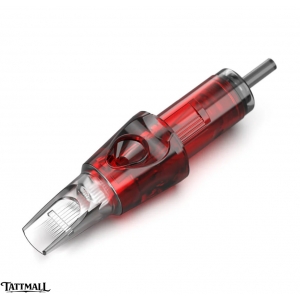
CNC Police 304 Stainless Steel Round Magnum RM Tattoo Cartridge Needles 20PCS
-
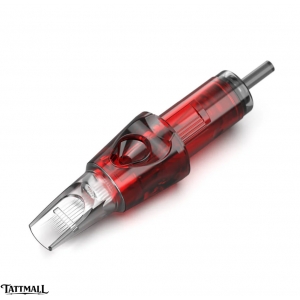
CNC Police 304 Stainless Steel Weaved Magnum M1 Tattoo Cartridge Needles 20PCS
-
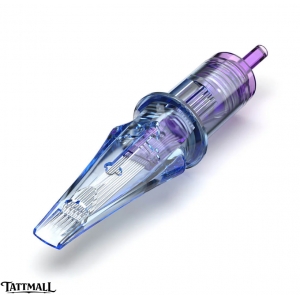
The King's Swords 304 Stainless Steel Round Magnum RM Tattoo Cartridge Needles 20PCS
-
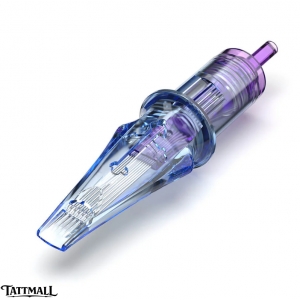
The King's Swords 304 Stainless Steel Weaved Magnum M1 Tattoo Cartridge Needles 20PCS


