There are no products to list in this category.
Patent Disputes in Tattoo Machines
Posted By Tattmall on Sunday 12th July 2026
Patent Disputes in Tattoo Machines
Patent protection has become one of the most influential competitive factors in the global tattoo equipment industry. As the demand for high-performance tattoo devices continues to grow across Europe and North America, manufacturers are investing heavily in research, engineering, and product innovation. New developments in wireless power systems, brushless motors, adjustable stroke mechanisms, digital controls, and cartridge compatibility have increased the commercial value of intellectual property. Consequently, patent disputes have become more frequent as companies seek to protect their technological advantages while expanding their market share. For manufacturers producing
tattoo machines
, securing intellectual property is now almost as important as developing the products themselves.
Innovation is the primary reason patent activity continues to accelerate. Modern tattoo equipment has evolved far beyond traditional coil machines. Today's rotary tattoo pens integrate sophisticated mechanical structures, electronic control systems, smart displays, firmware updates, Bluetooth connectivity, interchangeable battery modules, and ergonomic industrial design. Each technical improvement may qualify for patent protection if it demonstrates novelty and practical application. As companies compete to introduce new features, overlapping inventions occasionally result in intellectual property disputes involving design patents, utility patents, trademarks, or proprietary manufacturing technologies. The increasing popularity of professional tattoo machines has therefore made patent management an essential part of business strategy.
The most common disputes involve core mechanical technologies. Adjustable stroke systems, direct-drive mechanisms, motor transmission structures, cartridge locking systems, vibration reduction assemblies, and battery connections are among the components most frequently protected by patents. Because these technologies directly influence tattoo quality, machine durability, and user experience, they provide significant commercial value. Manufacturers developing advanced rotary tattoo machines often invest years in engineering improvements before launching new products, making patent protection critical for recovering research and development costs. At the same time, competitors must carefully design around existing patents to avoid infringement while continuing to innovate.
Wireless technology has created a new generation of intellectual property challenges. Cordless tattoo devices now incorporate rechargeable lithium batteries, intelligent charging circuits, power management software, wireless communication modules, and compact battery housings. Many of these technologies involve multiple patent families covering both hardware and software innovations. As battery-powered tattoo pens continue replacing traditional wired equipment, patent disputes increasingly focus on energy management algorithms, battery attachment systems, charging interfaces, and electronic control methods. Companies offering premium
tattoo machines
frequently build extensive patent portfolios to protect these innovations across international markets.
Industrial design patents are becoming increasingly valuable alongside technical patents. Beyond internal engineering, manufacturers also compete through distinctive product appearance, ergonomic grip shapes, user interface layouts, display arrangements, and overall product aesthetics. In highly competitive markets, visual design often influences purchasing decisions as much as technical specifications. Design patents therefore provide an additional layer of protection against product imitation while strengthening brand identity. Premium tattoo pen manufacturers commonly register both technical inventions and industrial designs to secure broader intellectual property coverage.
International expansion increases the complexity of patent enforcement. Europe and North America represent some of the world's largest tattoo equipment markets, but patent rights remain territorial. A patent granted in one country generally does not provide automatic protection elsewhere. Companies selling rotary tattoo systems internationally must therefore develop comprehensive intellectual property strategies covering multiple jurisdictions. Manufacturers also monitor competitors' patent filings, participate in freedom-to-operate analyses, and seek legal advice before introducing new products into foreign markets. These proactive measures reduce the likelihood of costly litigation while supporting long-term global expansion.
Patent licensing and cross-licensing are becoming practical business solutions. Rather than pursuing lengthy legal disputes, many manufacturers choose licensing agreements that allow authorized use of protected technologies. Cross-licensing enables two or more companies to exchange access to complementary patents, encouraging continued innovation while reducing legal uncertainty. Such agreements are particularly valuable when modern tattoo equipment combines multiple patented technologies developed by different organizations. Licensing can accelerate product development while providing inventors with additional revenue through royalty payments instead of prolonged courtroom battles.
Patent disputes also influence distributors, wholesalers, and professional buyers. Importers, retailers, and tattoo studios increasingly evaluate whether equipment originates from legitimate manufacturers that respect intellectual property rights. Purchasing products involved in unresolved patent disputes may create supply chain uncertainty, affect product availability, or complicate after-sales support. Many professional artists therefore prefer established brands with transparent research and development histories, strong quality control, and clearly documented intellectual property ownership. Reliable tattoo equipment is valued not only for its technical performance but also for the long-term stability of the manufacturer behind it.
Future technologies will generate entirely new patent opportunities. Artificial intelligence, adaptive motor control, cloud-based firmware updates, biometric security, pressure sensing, voice operation, and smart connectivity are rapidly entering the tattoo equipment industry. As these technologies mature, companies will compete to protect increasingly sophisticated software algorithms alongside traditional mechanical innovations. The combination of electronics, embedded software, and precision engineering means that future
tattoo machines
will rely on broader intellectual property portfolios than ever before. Businesses that balance continuous innovation with responsible patent management are likely to achieve stronger competitive positions over the coming decade.
In conclusion, patent disputes are an inevitable consequence of rapid technological progress within the tattoo equipment industry. Advances in rotary drive systems, wireless power, intelligent electronics, ergonomic design, and software integration continue to create valuable intellectual property that shapes global competition. Although legal disputes occasionally arise, effective patent protection also encourages long-term investment in research, engineering, and product quality. For manufacturers, distributors, and professional artists alike, understanding intellectual property has become an important part of evaluating modern tattoo machines, premium tattoo equipment, wireless tattoo pens, and other advanced tattoo technologies available throughout Europe and North America.
FAQ
1. Why are patent disputes increasing in the tattoo machine industry?
Rapid innovation in motors, wireless systems, electronics, and machine design has created more valuable technologies that manufacturers seek to protect.
2. Which tattoo machine components are most commonly patented?
Common patented technologies include motor transmission systems, adjustable stroke mechanisms, cartridge interfaces, battery systems, vibration control, and electronic control software.
3. Are design patents as important as technical patents?
Yes. Design patents protect a product's appearance, while technical patents protect functional innovations. Many manufacturers use both forms of protection.
4. How do patent disputes affect tattoo artists?
Artists may experience changes in product availability, pricing, after-sales support, or model selection if manufacturers become involved in intellectual property litigation.
5. Will patent activity continue to grow?
Yes. As AI, smart electronics, wireless technology, and intelligent control systems become more common, patent filings within the tattoo equipment industry are expected to continue increasing.
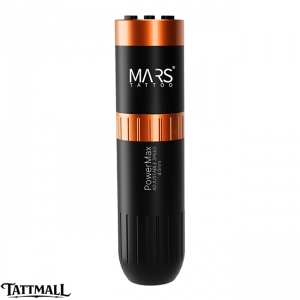
-300.jpg "MARS Stroke Mini Wireless Tattoo Machine 2.5/2.9/3.3/3.7mm Stroke (Dual Batteries)")
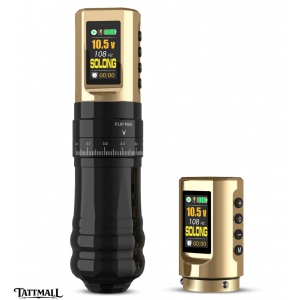
-300.jpg "MARS SMART PRO Wireless Tattoo Machine 2.4-4.2mm Stroke (Dual Batteries)")