There are no products to list in this category.
Power-Free Airbrush Tattoo Systems
Posted By Tattmall on Thursday 25th June 2026
Power-Free Airbrush Tattoo Systems
Power-free solutions for airbrush tattoo machines are attracting growing interest in the European and North American temporary body art market. While traditional tattoo equipment relies on electrical motors, batteries, or power supplies, airbrush tattoo systems can sometimes operate using alternative energy sources. These solutions are particularly useful for outdoor events, festivals, mobile businesses, promotional activities, and locations where electrical access is limited. Although permanent tattoo equipment still requires precise machine-driven needle movement, power-free airbrush systems offer a practical alternative for temporary tattoos and body art applications. For professionals exploring innovations beyond traditional
professional tattoo machines
, understanding these technologies can open new business opportunities.
Understanding the difference between permanent tattoo machines and airbrush tattoo systems is essential. Traditional tattoo equipment deposits pigment beneath the skin using rapidly moving needles powered by electric motors or electromagnetic mechanisms. In contrast, airbrush tattoo devices apply cosmetic-grade pigments to the skin surface through a controlled spray process. Because no needle penetration occurs, some airbrush systems can function without conventional electrical power. Artists familiar with professional tattoo equipment often add temporary airbrush services alongside their permanent tattoo offerings to diversify revenue streams and attract new clients.
Compressed air technology is the most common power-free solution. Instead of using electric compressors, certain airbrush tattoo systems utilize manually pressurized air tanks or refillable compressed gas canisters. The stored air pressure drives pigment through the airbrush nozzle, creating smooth and consistent designs. These systems are popular at outdoor events because they eliminate the need for electrical outlets and extension cables. Many artists who normally work with professional tattoo machines appreciate the portability and convenience offered by compressed-air alternatives when providing temporary body art services at festivals and exhibitions.
Manual pump systems provide another practical option. Some portable airbrush devices use hand-operated pumps to generate air pressure. Similar to manual inflation equipment, these systems store pressure in a small reservoir before application begins. While they may not provide the same continuous airflow as electric compressors, they are often sufficient for small designs and short-term use. Event artists and mobile operators value these systems because they are lightweight, affordable, and easy to transport. Compared with high-performance professional tattoo machines, manual airbrush systems serve a very different purpose but can still deliver attractive temporary artwork.
CO₂ cartridge-powered airbrush systems have become increasingly popular. Small carbon dioxide cartridges can provide a stable source of compressed gas without requiring electricity. These compact systems are frequently used by mobile entertainers, event organizers, and promotional marketing teams. The consistent pressure supplied by CO₂ cartridges helps maintain uniform spray quality, making them suitable for detailed temporary tattoo designs. Artists experienced with commercial tattoo equipment often find CO₂-powered airbrush units easy to integrate into existing business models because they require minimal setup and maintenance.
Sustainability and portability are major advantages of power-free airbrush solutions. Eliminating electrical requirements reduces dependence on generators, charging stations, and battery management systems. This can be particularly beneficial at outdoor venues where infrastructure is limited. Modern airbrush systems often incorporate lightweight materials, refillable pressure containers, and compact storage solutions. While they cannot replace advanced professional tattoo machines used for permanent tattooing, they offer an environmentally conscious and highly portable alternative for temporary body art applications.
Business opportunities are expanding as demand for temporary tattoos grows. Corporate events, music festivals, sporting events, theme parks, and private celebrations increasingly feature temporary tattoo stations. Power-free airbrush systems allow artists to operate in locations that may not support conventional electrical equipment. Many professional tattoo studios in Europe and North America now offer temporary tattoo services as a complementary business line. This approach enables them to reach younger audiences and clients who are interested in body art but not ready for permanent tattoos.
Safety and hygiene remain important even when no needles are involved. Although airbrush tattoos do not penetrate the skin, artists should still use cosmetic-grade pigments, maintain clean equipment, and follow appropriate hygiene standards. Reusable components should be cleaned according to manufacturer recommendations, and disposable accessories should be replaced regularly. Studios accustomed to working with premium tattoo systems and professional-grade tattoo equipment often adapt easily to these requirements because they already operate under strict hygiene protocols.
Technology continues to improve the performance of non-electric airbrush systems. Manufacturers are developing more efficient pressure reservoirs, improved nozzle designs, and better pigment formulations. These innovations allow power-free devices to achieve greater consistency and finer detail than earlier generations. While they remain fundamentally different from rotary tattoo machines and other professional tattoo equipment, modern airbrush systems are becoming increasingly sophisticated tools for temporary body art professionals.
In conclusion, power-free airbrush tattoo machines offer a flexible and practical solution for temporary tattoo applications. Through the use of compressed air tanks, manual pumps, and CO₂ cartridges, these systems can operate without traditional electrical power sources. Although they cannot replace
professional tattoo machines
used for permanent tattooing, they provide valuable opportunities for mobile artists, event operators, and tattoo businesses seeking to expand their services. As demand for temporary body art continues to grow throughout Europe and North America, power-free airbrush technology is likely to play an increasingly important role in the industry.
FAQ
1. Can a tattoo machine operate without electricity?
Permanent tattoo machines generally require electrical power, but temporary airbrush tattoo systems can operate using compressed air or gas cartridges.
2. What is the most common power-free airbrush solution?
Compressed air tanks and CO₂ cartridge systems are among the most widely used non-electric options.
3. Are airbrush tattoos permanent?
No. Airbrush tattoos are temporary designs applied to the skin surface and typically last several days depending on the pigment and skin conditions.
4. Can professional tattoo studios offer airbrush tattoos?
Yes. Many studios add temporary tattoo services to complement their permanent tattoo offerings and attract a wider range of clients.
5. Are power-free airbrush systems suitable for outdoor events?
Absolutely. Their portability and independence from electrical infrastructure make them ideal for festivals, exhibitions, and promotional activities.
Related Products
-
-300.jpg "MARS Power Max V1 Wireless Tattoo Machine 4mm Stroke (Dual Batteries)")
MARS Power Max V1 Wireless Tattoo Machine 4mm Stroke (Dual Batteries)
-
-300.jpg "MARS SMART PRO Wireless Tattoo Machine 2.4-4.2mm Stroke (Dual Batteries)")
MARS SMART PRO Wireless Tattoo Machine 2.4-4.2mm Stroke (Dual Batteries)
-
-300.jpg "MARS Stroke Mini Wireless Tattoo Machine 2.5/2.9/3.3/3.7mm Stroke (Dual Batteries)")
MARS Stroke Mini Wireless Tattoo Machine 2.5/2.9/3.3/3.7mm Stroke (Dual Batteries)
-
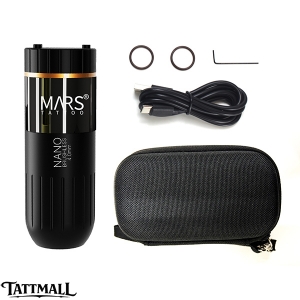
MARS NANO short battery pen MARS Nano Wireless Tattoo Pen Machine 4mm Stroke


