There are no products to list in this category.
RL, RS, M1, RM And Magnum
Posted By Tattmall on Friday 11th September 2026
RL, RS, M1, RM & Magnum
Understanding tattoo needle codes starts with learning what RL, RS, M1, RM, and Magnum actually mean. These abbreviations describe how individual needle pins are grouped and arranged, rather than simply indicating the size of the needle. For tattoo artists in France, knowing these configurations makes it easier to select the right equipment for lining, shading, color packing, and detail work. A code such as 5RL or 9RM combines information about the number of needle pins and their configuration, while diameter and taper are usually specified separately. In simple terms, the configuration determines the shape and working footprint of the needle group, while diameter, taper, machine movement, and technique influence how that group performs. Modern cartridge systems make these choices easier to identify, but the basic principles also apply to traditional needle-bar setups. (TattooBase)
What Does RL Mean?
RL stands for Round Liner and is primarily designed for controlled line work. The individual pins are grouped closely in a compact circular formation, creating a relatively narrow working point. Common examples include 3RL, 5RL, 7RL, and 9RL. Smaller groupings can be useful for fine details and delicate outlines, while larger configurations can produce stronger and wider-looking lines. However, the number of pins does not directly equal the final line width. Needle diameter, taper, spacing, machine stroke, hand movement, and technique all affect the finished result. A 5RL from two different manufacturers may therefore feel different even when the basic code is identical. Round liner configurations are generally chosen when an artist needs definition, precision, and controlled pigment placement. They are widely used for outlines, lettering, illustrative details, traditional designs, and other work where clean edges matter. (TattooBase)
What Does RS Mean?
RS means Round Shader, a round configuration with a more open grouping than a typical round liner. The pins still form a circular arrangement, but the spacing is generally less compact. This creates a broader and softer working effect, making RS configurations useful for small-area shading, soft fills, transitions, and certain color applications. Common sizes include 5RS, 7RS, and 9RS. Compared with an RL configuration containing the same number of pins, an RS usually produces a less concentrated mark. It is therefore better suited to situations where the artist wants controlled coverage rather than a sharply defined line. Round shader needles are particularly useful when an artist needs more flexibility between detailed work and broader shading. For French tattoo artists working in realism, illustrative, black-and-grey, ornamental, or mixed styles, having several RS options can make a setup more versatile. (TattooBase)
What Does M1 Mean?
M1 generally refers to a Magnum configuration, with needle pins arranged in two offset rows to create a wider working surface. Instead of concentrating the pins into a small circle, the magnum spreads them across a broader area. This makes M1 configurations popular for larger areas of shading and color packing. Examples include 5M1, 7M1, 9M1, and larger groupings. A magnum can cover more surface per pass than a small round grouping, which is why it is often selected for backgrounds, larger color areas, and broad shading. The term “Magnum” is sometimes used as a general category, while M1 identifies a particular configuration within that category. M1 is best understood as a standard or weaved magnum configuration rather than simply “a big needle.” Artists should also remember that different brands may use slightly different terminology or construction details, so product specifications should always be checked before purchase. (TattooBase)
What Does RM Mean?
RM usually refers to Round Magnum or Curved Magnum, a magnum configuration with a curved needle arrangement. Instead of presenting a completely flat edge, the pins follow a curved profile. This changes how the outer pins contact the working area and can provide a softer edge during shading and blending. RM configurations are commonly associated with smooth gradients, soft black-and-grey transitions, realism, and broader shading where an artist wants less of a hard edge. Some manufacturers and markets also use CM, meaning Curved Magnum, for a similar configuration. RM and CM terminology can vary between manufacturers, so artists should check the actual configuration diagram and product description rather than relying only on the letters. In practice, the curved profile is one of the main characteristics distinguishing an RM from a conventional flat M1. (tatuat.ro)
What Does Magnum Mean?
“Magnum” is a broader category of tattoo needle grouping rather than one single configuration. Magnums generally use multiple pins arranged across two rows, allowing a wider distribution of ink than a compact round configuration. M1 is commonly used for a standard or weaved magnum, while RM or CM generally indicates a curved magnum. Other magnum variations can include stacked configurations, which arrange the two rows differently and create a denser working surface. These variations can change pigment distribution, edge characteristics, and shading behavior. When someone says “use a Magnum,” the next question should be which Magnum configuration, size, diameter, and taper they mean. This distinction is especially important when buying cartridge needles online because product names can differ slightly between manufacturers. A professional artist should look beyond the word “Magnum” and review the complete specification. (TattooBase)
How Do Needle Codes Work?
The number and letters in a needle code provide different pieces of information. For example, “7RL” normally indicates seven needle pins arranged as a Round Liner, while “9M1” indicates nine pins in a Magnum configuration. A longer code such as “1207RL” can additionally include diameter information: in many common coding systems, “12” refers to a nominal 0.35 mm pin diameter, “07” indicates seven pins, and “RL” identifies the configuration. However, coding conventions can vary, so the manufacturer's specification should take priority. The letters describe configuration, while the number usually describes the pin count—not the exact width of the finished tattoo line. Diameter, taper, pin spacing, soldering, and membrane design can all influence how the cartridge behaves on a rotary or pen-style machine. (TattooBase)
How Do These Configurations Work With Tattoo Machines?
The machine, cartridge, and needle grouping should be considered as one working system. Modern rotary and pen-style tattoo machines commonly use cartridge systems, while traditional machines may use needle bars and tubes. Machine stroke length, operating characteristics, give, hand speed, and the chosen needle configuration can all influence the result. A small RL may behave very differently from a large M1 even when both are used on the same machine. Likewise, changing from an M1 to an RM can alter the way the needle group contacts the working area. There is no universal machine setting or single “best” configuration for every artist because the correct choice depends on the machine, technique, design, skin, and intended result. Artists should follow the machine manufacturer's specifications and develop settings through appropriate professional practice rather than copying one fixed setting for every needle grouping.
How Should French Artists Choose Between RL, RS, M1, and RM?
The easiest approach is to select the configuration according to the job the artist wants to perform. RL is generally the natural choice for outlines and precise line work, RS for smaller shading and controlled fills, M1 for broader coverage and color packing, and RM for softer shading and blending. Fine-line work may also involve smaller-diameter configurations, while bold traditional work may favor larger groupings. Realism and black-and-grey artists may use several RM and other shading configurations to create different transitions. The configuration should match the visual effect rather than simply the tattoo style name. A professional artist may use several different groupings within one tattoo, switching between liner, shader, and magnum configurations as the design moves from outlines to details, shadows, gradients, and larger color areas. (tatuat.ro)
Hygiene and Cartridge Selection in France
For French tattoo professionals, needle configuration must always be considered alongside hygiene and single-use requirements. French health authorities state that needles penetrating the skin must be sterile and single-use, and materials that penetrate the skin barrier or directly support such equipment must meet applicable requirements for single-use or sterilization. France also references European good-practice standards for tattoo hygiene. Artists should therefore purchase sealed, sterile products from reliable suppliers and follow the manufacturer's instructions for storage and use. A sophisticated needle configuration cannot compensate for poor hygiene practices or unsuitable equipment. Cartridge membranes, packaging integrity, expiry information where applicable, and compatibility with the machine should also be checked before use. (健康部网站)
Conclusion
RL, RS, M1, RM, and Magnum describe different ways of arranging needle pins for different tattooing tasks. RL means Round Liner and is commonly associated with precise lines; RS means Round Shader and is useful for smaller shading areas; M1 generally describes a standard magnum for broader coverage; RM commonly refers to a curved or round magnum for softer shading and blending; and Magnum itself is a broader family that includes several configurations. Understanding these abbreviations helps French artists compare cartridge needles more intelligently and build a setup suited to their techniques. Diameter, taper, pin count, spacing, machine characteristics, and professional technique still need to be considered together. In other words, choosing the right tattoo needles is not simply about memorizing abbreviations—it is about understanding how needle geometry affects the way a tattoo machine delivers pigment and creates a visual result. (TattooBase)
5 FAQs About Tattoo Needle Configurations
1. What does RL mean on tattoo needles?
RL means Round Liner. It refers to a tightly grouped circular configuration commonly used for outlines, lettering, fine details, and controlled line work.
2. What is the difference between RL and RS?
RL is a tighter round grouping, while RS is a more open round grouping. RL is generally preferred for defined lines, while RS is commonly used for small-area shading and softer fills.
3. Is M1 the same as Magnum?
M1 is one common type of Magnum configuration. “Magnum” is a broader category that can include standard/weaved, curved, and other variations. Always check the manufacturer's exact configuration.
4. What is the difference between M1 and RM?
M1 generally has a flatter magnum profile, while RM uses a curved profile. M1 is commonly used for broad shading and color packing, while RM is often selected for softer shading and blending.
5. Which tattoo needles should beginners understand first?
RL, RS, M1, and RM are a practical starting point. Learning how these four configurations differ gives beginners a useful foundation for understanding line work, small-area shading, broad coverage, and soft transitions before exploring more specialized groupings.
Related Products
-
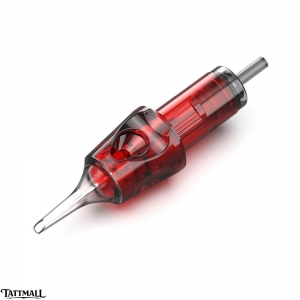
CNC Police 304 Stainless Steel Round Shader RS Tattoo Cartridge Needles 20PCS
-
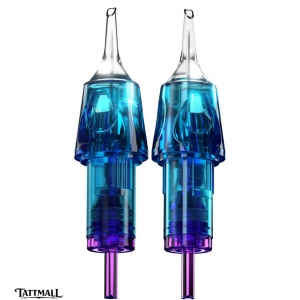
CNC Dimension 304 Stainless Steel Round Shader RS Tattoo Cartridge Needles 20PCS
-
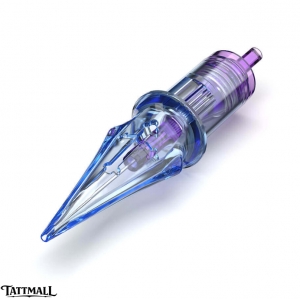
The King's Swords 304 Stainless Steel Round Shader RS Tattoo Cartridge Needles 20PCS
-
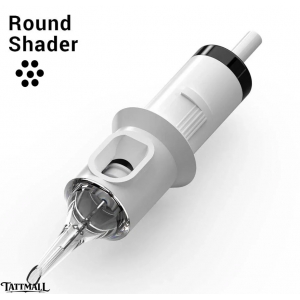
Quelle 304 Stainless Steel Needles Round Shader RS Tattoo Cartridge 20PCS


