There are no products to list in this category.
Round Liner Tattoo Needles
Posted By Tattmall on Wednesday 16th September 2026
Round Liner Tattoo Needles
Round liner tattoo needles are mainly used for clean lines, outlines, lettering, and precise tattoo details. Known as RL needles, they consist of individual needle pins arranged in a relatively tight circular grouping. This concentrated configuration allows an artist to place pigment along a controlled path rather than distributing it across a wide surface. In the U.S. tattoo market, round liners are widely used for traditional, neo-traditional, fine-line, illustrative, ornamental, and lettering work. However, the performance of a liner depends on more than its RL label. Needle count, diameter, taper, soldering, machine characteristics, hand speed, and technique can all change the final result. Choosing the right tattoo needles is therefore a combination of configuration and application, not simply choosing the smallest needle available.
What Are Round Liner Needles?
A round liner is a needle configuration in which multiple pins are grouped closely into a circular formation. Common configurations include 1RL, 3RL, 5RL, 7RL, and larger groupings. The number normally indicates the number of needle points in the grouping, while “RL” means Round Liner. Because the points are concentrated toward the center, an RL can produce a more defined mark than a more open round shader configuration. A 3RL, for example, is generally narrower than a 7RL when other specifications are comparable. However, needle count should not be treated as an exact line-width measurement because diameter, taper, spacing, and manufacturing specifications also affect the working footprint. The main advantage of the round liner is controlled pigment placement for defined marks.
Main Uses of Round Liners
The primary use of round liner tattoo needles is precise linework. Artists commonly select RL configurations for tattoo outlines, interior contours, lettering, symbols, small details, ornamental patterns, and selected dotwork or stippling effects. Smaller configurations can support delicate details, while larger RL groupings can create stronger and more substantial outlines. Round liners are also useful when an artist needs to follow curves, corners, or intricate design elements without the wider footprint associated with magnum configurations. The tighter needle grouping concentrates the working area, making RL configurations particularly useful when edge definition matters. For American tattoo styles that depend on readable contours and strong graphic structure, the ability to control line placement is often more important than simply maximizing ink coverage.
3RL, 5RL, and 7RL: What Is the Difference?
Different RL counts are generally selected according to the desired line weight and level of detail. A 3RL has three needle points and is commonly considered a relatively fine configuration, while 5RL offers a broader working group and 7RL produces a wider mark when diameter, taper, and spacing are otherwise similar. Smaller liners can be useful for delicate lettering, fine details, and intricate ornamental designs. Medium configurations are versatile for everyday outlines, while larger round liners can suit heavier graphic work. These are general tendencies rather than fixed rules. A 5RL from one manufacturer may not behave exactly like a 5RL from another manufacturer. Needle diameter, taper length, soldering distance, and grouping tightness can change how much pigment is deposited and how the line develops.
Fine-Line and Detailed Tattooing
Small round liners are especially useful when a design requires controlled, delicate linework. Fine-line artists may choose configurations such as 1RL, 3RL, or small-diameter liners for intricate details, tiny lettering, ornamental patterns, and micro-detail work. However, extremely small configurations require appropriate professional technique and should not automatically be considered suitable for every design or skin area. A very fine needle does not guarantee a perfect healed line. Machine movement, hand speed, skin characteristics, pigment, needle specifications, and the artist's technique all contribute to the final appearance. Fine-line tattooing is about controlled application, not simply using the smallest possible tattoo needles. Artists should also remember that product coding differs between manufacturers, so checking the actual diameter and taper is important when comparing fine-line cartridges.
Round Liners for Traditional and Bold Work
Round liners are not limited to fine-line tattoos; larger RL configurations can also create bold, readable outlines. American traditional and neo-traditional designs often depend on strong contours, and artists may choose larger round liner groupings according to the scale and visual weight of the design. A larger RL can place pigment across a broader line than a small liner while retaining the concentrated circular configuration. The correct choice depends on the artwork, the artist's technique, and the desired healed appearance. A bold tattoo does not necessarily require the largest available needle, just as a detailed tattoo does not always require a single-needle setup. Matching needle configuration to the actual line weight is more useful than following a rigid size rule.
Round Liner vs. Round Shader
Round liners and round shaders may look similar, but their configurations are designed for different applications. RL needles generally use a tighter grouping to concentrate pigment for defined lines, while RS needles have more spacing between the pins and are commonly used for small-area shading, soft fills, and tonal transitions. An artist may therefore use an RL for the outline and switch to an RS or magnum for shading and larger color areas. The key difference is how the needle grouping distributes pigment and contacts the working area. Using an RL for every part of a tattoo can make broader filling inefficient, while using a more open shader for a precise contour may not provide the same degree of line control. Understanding these configuration differences helps artists choose equipment based on the intended visual effect.
How Taper and Diameter Affect an RL
Needle count is only one specification; diameter and taper can significantly change how a round liner behaves. Diameter refers to the thickness of each individual needle point, while taper describes how gradually the point narrows toward its tip. A longer taper can create a different pigment-delivery and contact profile from a shorter taper, even when both products have the same RL count. Different diameters can also influence the apparent line weight and pigment flow. For this reason, two 5RL tattoo needles can produce noticeably different results when their diameter, taper, or grouping construction differs. When purchasing cartridge needles in the U.S., artists should read the complete product specification instead of choosing solely from the RL number printed on the box.
Matching RL Needles With Tattoo Machines
A round liner should be selected together with the tattoo machine rather than treated as an independent component. Modern rotary and pen-style tattoo machines commonly use cartridge systems, while traditional machines can use needle bars and tubes. Machine stroke, operating characteristics, give, hand speed, and needle configuration can all affect the result. A small RL and a large RL may require different working approaches even when used with the same machine. Wireless machines can offer greater freedom of movement, but they do not remove the need to match the machine and needle configuration. There is no universal machine setting that makes every RL configuration perform identically. Artists should follow the machine manufacturer's operating guidance and develop their professional technique through appropriate training and controlled practice.
Cartridge Needles and Studio Selection
Modern cartridge systems make round liner configurations convenient to identify and change during a tattoo session. A cartridge can contain the RL grouping, needle bar, and other components in a compact disposable unit designed for compatible machines. When choosing cartridge needles, artists should check configuration, needle count, diameter, taper, compatibility, packaging, and manufacturer specifications. A reliable cartridge should not be judged only by its marketing name. Professional equipment selection should prioritize consistent specifications and compatibility with the artist's machine and working method. Sterile, single-use equipment and appropriate disposal practices are also fundamental parts of professional tattooing. For U.S. studios, artists should follow applicable local requirements as well as manufacturer instructions for storage, handling, and disposal.
How to Choose the Right Round Liner
The right RL configuration depends on the line, design scale, machine, and artist's technique. For extremely delicate details, a smaller configuration may be appropriate; for standard outlines, a medium RL can provide a useful balance of precision and coverage; and for bold graphic work, a larger liner may be more practical. Artists should also compare tight versus looser groupings, different tapers, and different diameters rather than assuming all RL products perform the same way. The most useful approach is to build a small range of reliable liners and learn how each behaves with a particular machine. Over time, artists can establish their preferred combinations for fine-line, lettering, traditional outlines, ornamental work, and detailed illustration.
Conclusion
Round liner tattoo needles are designed primarily for controlled linework and precise pigment placement. Their tight circular configuration makes them useful for outlines, lettering, fine details, ornamental designs, traditional contours, and selected dotwork applications. Different RL counts provide different working footprints, but count alone does not determine the finished line. Diameter, taper, grouping, machine characteristics, hand movement, and technique all contribute to performance. For U.S. tattoo artists, choosing the right tattoo needles means looking beyond the RL label and understanding the complete configuration. A practical selection of compatible, professionally manufactured liners can give artists greater flexibility across different tattoo styles while allowing them to choose the configuration that best matches the design and desired line weight.
5 FAQs About Round Liner Tattoo Needles
1. What are round liner tattoo needles used for?
Round liners are mainly used for outlining, lettering, fine details, ornamental work, and controlled linework. They can also be used for certain stippling and small-detail effects.
2. What is the difference between 3RL, 5RL, and 7RL?
The number generally indicates the number of needle points in the grouping. When other specifications are comparable, 3RL is typically finer than 5RL, while 7RL provides a broader working group.
3. Are round liners good for shading?
They can be used for stippling, texture, and selected small shading applications, but they are not generally the first choice for broad shading. Round shaders and magnums are designed for wider pigment distribution and larger coverage.
4. Does a larger RL always create a thicker line?
Not necessarily. Needle count is important, but diameter, taper, spacing, soldering, machine movement, and technique can all affect the resulting line.
5. Can round liner cartridges be used with any tattoo machine?
No. Cartridge systems need to be compatible with the specific machine or cartridge-grip system. Artists should check the machine manufacturer's compatibility information before purchasing or using cartridge needles.
Related Products
-
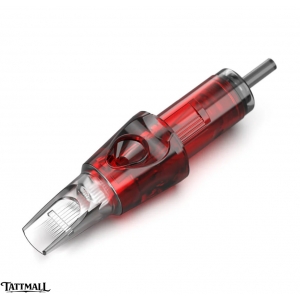
CNC Police 304 Stainless Steel Round Magnum RM Tattoo Cartridge Needles 20PCS
-
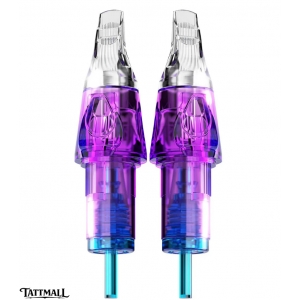
CNC Dimension 304 Stainless Steel Round Magnum RM Tattoo Cartridge Needles 20PCS
-
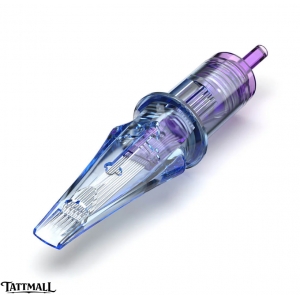
The King's Swords 304 Stainless Steel Round Magnum RM Tattoo Cartridge Needles 20PCS
-
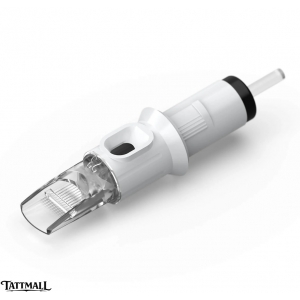
Quelle 304 Stainless Steel Needles Round Magnum Softedge RM Tattoo Cartridge 20PCS


