There are no products to list in this category.
Tattoo Machine Data Privacy
Posted By Tattmall on Friday 21st August 2026
Tattoo Machine Data Privacy
User data privacy is becoming an important consideration as modern tattoo equipment becomes more connected. Traditional tattoo machines generally operate without collecting personal information, but newer wireless and smart devices may connect to mobile applications, cloud platforms, Bluetooth systems, firmware services, or studio management tools. Depending on the product design, information could include account details, device identifiers, usage statistics, diagnostic records, software settings, or other information associated with a customer or artist. For the U.S. market, manufacturers should therefore treat privacy and cybersecurity as part of the overall product design rather than as an optional software feature. A connected
tattoo pen machine
should collect only information that is genuinely necessary and provide users with understandable information about how that data is handled.
Data minimization is one of the most important principles for protecting user privacy. A manufacturer should first determine what information the machine actually needs to provide its functions. For example, a wireless tattoo machine may need a device identifier to establish a Bluetooth connection, but it may not need access to a user's entire contact list, location history, photographs, or unrelated phone data. The Federal Trade Commission recommends that businesses understand what personal information they hold, collect only what is needed, protect retained information, and dispose of information when it is no longer necessary. (Federal Trade Commission) This principle is particularly relevant when developing applications for a connected tattoo pen machine.
A clear privacy policy should explain what data is collected and why. Users should not have to interpret complicated technical language to understand whether a tattoo machine application collects account information, diagnostic data, analytics, or device usage information. A good privacy notice should identify the categories of information collected, the purpose of collection, how long information is retained, whether information is shared with service providers, and how users can exercise applicable privacy rights. For manufacturers selling throughout the United States, privacy obligations can vary by state, so companies should evaluate the laws applicable to their particular business and data practices rather than assuming that one nationwide rule covers every situation.
Connected tattoo equipment should use strong access controls to prevent unauthorized users from accessing device data. Bluetooth pairing, application accounts, administrative controls, and cloud services can all become potential security points. A manufacturer can reduce risk through measures such as unique device credentials, appropriate authentication, secure communications, and access controls based on user roles. NIST's IoT guidance identifies cybersecurity capabilities and manufacturer practices that can help protect connected devices and the data and systems associated with them. For a professional tattoo machine, security should be considered throughout the product lifecycle rather than added only after a vulnerability is discovered.
Encryption can provide an important layer of protection when sensitive information is transmitted or stored. If a smart tattoo machine communicates with a mobile application or cloud service, manufacturers should use appropriate security measures to protect data while it moves between systems. Stored information should also be protected against unauthorized access. Not every piece of machine telemetry represents highly sensitive personal information, but combining multiple data points can sometimes reveal more about a user than expected. Therefore, manufacturers should evaluate the entire information flow rather than treating each individual data field as harmless.
Firmware and application updates are essential parts of long-term privacy protection. A connected tattoo machine may remain in service for years, while cybersecurity threats and mobile operating systems continue to change. Manufacturers should have a process for identifying vulnerabilities, distributing security patches, and communicating important updates to customers. NIST's 2026 guidance for IoT manufacturers emphasizes providing cybersecurity functionality and the information customers need to manage security risks throughout the product lifecycle. For artists purchasing a smart tattoo pen machine, long-term software support can therefore be almost as important as motor performance, battery life, or ergonomics.
Privacy protection should extend beyond the machine itself to companion mobile applications. An app may request permissions that are not directly related to tattoo equipment, creating unnecessary privacy exposure. Manufacturers should follow the principle of least privilege and request only the permissions required for specific functions. For example, Bluetooth access may be necessary for connecting to a machine, while access to unrelated personal content may not be necessary. The FTC specifically recommends that mobile applications access only the data and functionality they need and avoid collecting or retaining personal information without a legitimate purpose. (Federal Trade Commission)
Cloud storage creates additional privacy responsibilities for connected tattoo equipment. Cloud services can provide useful functions such as synchronizing settings, managing multiple machines, providing remote diagnostics, or delivering firmware updates. However, information stored remotely can create additional security and retention requirements. Manufacturers should determine exactly what data needs to be stored in the cloud and whether certain functions can operate locally instead. A privacy-focused system might keep basic machine controls available offline while using cloud services only for functions that genuinely require remote connectivity.
Remote diagnostics should be designed with data minimization in mind. Smart tattoo equipment may be able to send information about battery condition, motor performance, error codes, operating temperature, or firmware status to technical support. This can make troubleshooting faster, but manufacturers should avoid collecting unrelated personal information simply because the connected device technically allows it. NIST identifies privacy and cybersecurity risk management as important considerations for IoT products because connected devices can interact with both physical environments and information systems. (NIST) A good diagnostic system should therefore transmit the minimum technical information needed to identify the equipment problem.
Studio owners also have a role in protecting customer and employee information. A connected tattoo machine may be only one component of a larger studio technology environment that includes appointment systems, payment platforms, customer records, computers, and Wi-Fi networks. Even if the machine itself is secure, weak passwords or poorly protected studio networks can create broader risks. Studios should use strong account credentials, keep applications and firmware updated, limit administrative access, and separate business systems where appropriate. Connected professional tattoo equipment should be treated as part of the studio's technology environment rather than as an isolated electronic tool.
Privacy considerations become especially important when machine data is connected with identifiable customer information. Basic machine telemetry may not identify an individual on its own. However, if a studio links machine records with appointment information, artist profiles, customer accounts, or other databases, the combined dataset may become more sensitive. Manufacturers and studios should carefully consider whether such connections are necessary. The FTC's data-security guidance recommends retaining sensitive information only when there is a legitimate business need and securely disposing of information that is no longer required. (Federal Trade Commission)
Manufacturers should also provide transparent controls for account deletion and data retention where applicable. Users may reasonably want to understand what happens to their information when they stop using a machine, uninstall an application, transfer ownership, or close an account. A mature privacy system should have documented retention periods and procedures for deleting or de-identifying information when appropriate. The exact legal requirements can differ depending on the user's state, the nature of the information, and the company's business activities, so manufacturers should obtain appropriate legal advice when designing U.S. privacy programs.
Security-by-design is more effective than trying to repair privacy problems after launch. NIST's IoT recommendations encourage manufacturers to consider cybersecurity capabilities, documentation, secure development, supply-chain practices, and product support as part of the product lifecycle. (NIST) For tattoo equipment manufacturers, this means considering privacy before a connected product reaches the market. Threat modeling, security testing, vulnerability management, controlled software updates, and clear customer documentation can reduce risks and increase user confidence.
Future tattoo machines may collect more data, making privacy design increasingly important. Sensors, AI-assisted diagnostics, usage analytics, cloud synchronization, and personalized settings could make professional equipment more intelligent. A future tattoo pen machine might monitor operating patterns and automatically recommend maintenance or configuration changes. These features can provide genuine value, but they should not become an excuse for unlimited data collection. Manufacturers should clearly distinguish between data required to operate a feature and information collected merely for analytics or commercial purposes.
For the U.S. market, privacy compliance should be considered a continuing process rather than a one-time certification. Federal consumer-protection principles, state privacy laws, cybersecurity expectations, contractual requirements, and technology standards can all influence how a connected product should be designed. The FTC has emphasized reasonable security practices and responsible handling of personal information, while NIST provides voluntary technical guidance for IoT cybersecurity and privacy risk management. (Federal Trade Commission) Manufacturers should therefore review their privacy practices regularly as products, applications, and applicable legal requirements evolve.
In conclusion, user data privacy is becoming an important part of the design of smart tattoo equipment. Strong authentication, secure communications, encryption, data minimization, transparent privacy policies, limited permissions, regular security updates, and responsible data retention can all reduce privacy risks. For American tattoo artists and studios, choosing a connected
tattoo pen machine
should involve more than evaluating motor power and battery capacity; software support, privacy controls, and cybersecurity practices are also worth considering. As tattoo machines become increasingly connected, the most trustworthy products will be those that deliver useful smart functions while collecting and exposing as little personal information as reasonably necessary.
FAQ
1. What type of data can a smart tattoo machine collect?
Depending on the design, it may collect device identifiers, battery information, operating parameters, diagnostic data, firmware information, usage statistics, or account information. The exact data varies by manufacturer and product.
2. Does a tattoo machine need my personal information to work?
Not necessarily. Basic machine functions generally do not require extensive personal information. However, advanced features such as cloud synchronization, remote diagnostics, or personalized accounts may require some data.
3. How can tattoo machine manufacturers improve data privacy?
Manufacturers can use data minimization, encryption, strong authentication, limited application permissions, secure software development, vulnerability management, regular updates, and clearly defined retention policies.
4. Is a smart tattoo machine covered by one U.S. privacy law?
Not necessarily. U.S. privacy requirements can vary according to the state, type of data, business activities, and other factors. Companies selling connected tattoo equipment should evaluate the laws and obligations relevant to their specific operations.
5. What should tattoo artists check before buying a connected machine?
Artists should review the privacy policy, requested app permissions, account requirements, data collection practices, security-update policy, cloud functions, offline capabilities, and manufacturer support period. These factors can be important when choosing professional connected tattoo equipment.
-300.jpg "MARS M1 Tattoo PEN Wireless Tattoo Machine 4mm Stroke (Dual Batteries)")
-300.jpg "MARS Power Max V1 Wireless Tattoo Machine 4mm Stroke (Dual Batteries)")
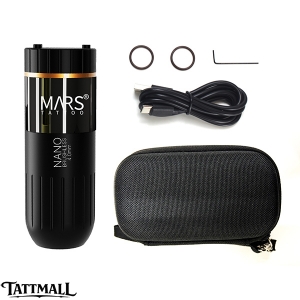
-300.jpg "MARS Intelli Wireless Tattoo Machine 4mm Stroke (Dual Batteries)")


