There are no products to list in this category.
Tattoo Machine Ethics Standards
Posted By Tattmall on Monday 24th August 2026
Tattoo Machine Ethics Standards
Ethical standards in the tattoo machine industry are gradually expanding from basic product safety toward broader responsibilities covering artists, clients, manufacturers, suppliers, and the environment. In the United States, tattooing is primarily regulated at the state and local levels, so there is no single nationwide ethical code that governs every tattoo machine manufacturer or studio. Instead, professional expectations are shaped by public-health requirements, consumer-protection principles, industry practices, manufacturer responsibilities, and professional associations. As tattoo equipment becomes more advanced, ethical considerations increasingly include product transparency, safe design, responsible marketing, data privacy, sustainability, and fair treatment of users. A modern tattoo pen machine is therefore no longer evaluated only by motor performance or appearance; the way it is designed, marketed, maintained, and used also matters.
Client safety remains the foundation of ethical standards in the tattoo industry. Tattooing involves equipment that can break the skin and potentially expose users to bloodborne pathogens. For this reason, responsible manufacturers should clearly distinguish between reusable and single-use components and provide accurate instructions for cleaning, disinfection, sterilization, and disposal. The CDC emphasizes appropriate infection-control practices for settings where exposure to blood or body fluids may occur. Ethical equipment design should make safe practices easier rather than encouraging shortcuts. For example, disposable cartridge systems, protective barriers, easy-to-clean surfaces, and clear maintenance instructions can reduce avoidable risks.
Product transparency is another important ethical principle. Manufacturers should accurately describe specifications such as motor type, operating voltage or power range, battery capacity, charging requirements, stroke length, needle compatibility, and expected operating characteristics. Marketing should not promise performance that the machine cannot consistently deliver. Claims such as “professional,” “medical-grade,” “sterile,” or “safe” should have a meaningful technical or regulatory basis rather than being used simply to increase sales. For a professional tattoo pen machine, transparent specifications allow artists to compare products based on actual capabilities instead of exaggerated advertising.
Ethical standards also require manufacturers to communicate limitations honestly. Every tattoo machine has operating limits. Motors can generate heat, batteries have finite lifespans, components can wear out, and electronic systems may eventually require maintenance. A responsible manufacturer should provide warnings about inappropriate use, charging conditions, compatible accessories, and maintenance requirements. If a machine is not designed to be immersed in liquid, for example, the cleaning instructions should make that limitation clear. Good ethical practice means giving users enough information to make safe decisions instead of hiding weaknesses behind promotional language.
The treatment of tattoo artists is also becoming part of responsible industry practice. Professional artists depend on reliable equipment for precision, comfort, and productivity. Manufacturers should therefore consider ergonomics, vibration, weight distribution, grip design, noise, battery management, and long-session usability. A well-designed rotary tattoo machine should not force artists to accept unnecessary physical strain simply because a cheaper construction method is more profitable. Product development should take real-world professional workflows into account and use user feedback to improve future designs.
Ethical manufacturing extends beyond the final tattoo machine to the supply chain. Manufacturers increasingly face questions about labor conditions, material sourcing, quality control, counterfeit components, and environmental practices. Responsible companies should establish reasonable supplier standards and maintain quality-control procedures for critical components such as motors, batteries, electronic boards, and needle-compatible parts. This is particularly important because inconsistent components can affect machine performance and potentially create safety problems. Ethical sourcing does not necessarily mean that every component must come from one country; it means that manufacturers should understand and manage the risks within their supply chains.
Battery safety is becoming especially important as wireless tattoo machines become more common. Rechargeable lithium-ion batteries can provide excellent portability, but they also require appropriate charging, protection circuitry, storage, and transportation practices. Manufacturers should provide accurate information about charging equipment, operating conditions, battery replacement, and disposal. A wireless tattoo machine should not be marketed as completely risk-free simply because it is cordless. Responsible product design considers foreseeable misuse and provides safeguards that reduce the consequences of common errors.
Environmental responsibility is another emerging part of industry ethics. Tattoo studios can generate disposable cartridges, protective films, gloves, ink containers, wipes, packaging, and other waste. Not all of these materials can simply be replaced with biodegradable alternatives because infection-control requirements and material performance must also be considered. However, manufacturers can still reduce unnecessary packaging, improve product durability, provide replaceable components where appropriate, and use recyclable materials when they do not compromise safety. The ethical goal should be a practical balance between infection control, product performance, and environmental impact.
Responsible advertising is particularly important in an industry where consumers may have limited technical knowledge. Manufacturers and retailers should avoid creating unrealistic expectations about what a tattoo machine can accomplish. Statements suggesting that a particular machine automatically produces perfect lines, eliminates skin trauma, or guarantees professional results can be misleading. Tattoo quality depends on many variables, including artist skill, needle configuration, machine setup, technique, skin characteristics, and ink. A professional tattoo pen machine can provide useful technical capabilities, but it cannot replace professional training and judgment.
Consumer education should therefore be considered part of ethical product development. Manufacturers can provide clear manuals, maintenance instructions, compatibility charts, troubleshooting information, and safety guidance. They can also explain the difference between machine specifications that directly affect operation and marketing features that provide convenience but may not improve tattoo quality. Better education helps artists make informed purchasing decisions and reduces inappropriate equipment use. In this sense, ethical standards benefit both manufacturers and consumers by creating greater trust within the industry.
After-sales service is another area where ethical practices can make a significant difference. A manufacturer should provide reasonable information about warranties, repairs, replacement parts, battery service, and software support. If a machine contains proprietary electronic components, customers should understand whether repairs are available and how long critical parts are expected to remain supported. Abandoning a connected machine's software shortly after purchase can make otherwise functional equipment difficult to use. Long-term support is therefore increasingly relevant for smart tattoo machines that depend on firmware or mobile applications.
Data privacy is becoming part of ethical responsibility as tattoo equipment becomes connected. Modern machines may communicate with mobile applications through Bluetooth or other wireless technologies and may potentially collect device information, diagnostic records, usage statistics, or account information. Manufacturers should avoid collecting unnecessary personal data and should clearly explain what information is collected and why. U.S. privacy obligations vary by jurisdiction and business activity, but responsible companies should still adopt sensible data-minimization and security practices. A connected tattoo pen machine should not require excessive access to a user's smartphone simply to provide basic equipment functions.
Cybersecurity is closely related to this new ethical responsibility. Connected tattoo equipment can potentially receive firmware updates, communicate with applications, or interact with cloud services. Manufacturers should consider secure authentication, appropriate access controls, software-update mechanisms, and vulnerability management. NIST provides cybersecurity guidance for IoT manufacturers that emphasizes security capabilities and product support throughout the product lifecycle. For advanced tattoo equipment, cybersecurity should be treated as part of responsible engineering rather than merely an optional software feature.
The industry also needs to distinguish ethical standards from legal requirements. Compliance with applicable U.S. laws and local health regulations is the minimum obligation, while ethical behavior can go beyond what is legally required. A product may technically satisfy a regulation while still being poorly documented, difficult to repair, unnecessarily wasteful, or marketed in a misleading way. Ethical standards encourage companies to consider the broader consequences of their decisions. This distinction is particularly useful in a rapidly developing industry where technology can evolve faster than formal regulations.
Professional organizations and industry communities can contribute to the development of stronger voluntary standards. Training organizations, manufacturers, experienced artists, health professionals, and regulators can provide different perspectives on equipment safety and professional practice. Collaboration can help identify common problems and establish clearer expectations for machine design, hygiene-related features, training materials, and responsible marketing. Such voluntary standards may also help create greater consistency across a U.S. market where regulatory requirements can differ between states and local jurisdictions.
Technology development is likely to make ethical standards more complex rather than less important. Future tattoo machines may include sensors, automated parameter recommendations, AI-assisted functions, connected diagnostics, advanced battery systems, and more detailed performance monitoring. These technologies could improve consistency and convenience, but they may also introduce questions about data ownership, algorithmic recommendations, software reliability, and user responsibility. Manufacturers should therefore consider ethical implications during product development rather than waiting until a technology becomes widely adopted.
For tattoo artists, ethical purchasing decisions can support better industry practices. Artists can look beyond price and marketing claims by checking whether a manufacturer provides clear technical specifications, reliable warranty support, appropriate safety instructions, replacement parts, software updates, and transparent privacy policies. Buying from responsible suppliers can encourage manufacturers to invest in quality and long-term support. A high-quality tattoo machine should be evaluated not only by how it feels in the hand but also by the company's overall approach to safety, transparency, and customer responsibility.
In conclusion, ethical standards in the U.S. tattoo machine industry are developing as technology, professional expectations, and consumer awareness evolve. Safety, transparency, ergonomics, responsible manufacturing, battery management, environmental responsibility, honest marketing, after-sales service, privacy, and cybersecurity are increasingly interconnected. There is unlikely to be one simple rule covering every manufacturer or machine, but these principles provide a useful framework for responsible development. The strongest companies will be those that treat ethics as part of product quality rather than as a marketing slogan. As connected equipment becomes more common, the best tattoo pen machine will ultimately be one that combines reliable performance with thoughtful design, clear information, responsible manufacturing, and respect for the artists and clients who depend on it.
FAQ
1. Is there one ethical standard for tattoo machines in the United States?
No. The U.S. tattoo industry is influenced by federal requirements, state and local regulations, public-health rules, consumer-protection principles, and voluntary professional standards. Requirements can vary significantly between jurisdictions.
2. What is the most important ethical issue for tattoo machine manufacturers?
Safety is the primary concern. Manufacturers should design equipment that supports appropriate hygiene, reliable operation, safe battery use, clear maintenance, and proper handling of disposable and reusable components.
3. Should manufacturers disclose the limitations of a tattoo machine?
Yes. Accurate information about operating ranges, compatible components, battery limitations, cleaning restrictions, maintenance requirements, and expected performance helps artists make informed decisions and reduces misuse.
4. Are privacy and cybersecurity relevant to tattoo machines?
Increasingly, yes. Wireless and smart machines may connect to mobile applications or cloud services. Manufacturers should minimize unnecessary data collection and provide appropriate security measures for connected functions.
5. How can tattoo artists support better industry ethics?
Artists can choose transparent manufacturers, follow safety instructions, avoid counterfeit equipment, evaluate warranty and repair support, protect client information, and avoid relying on unverified marketing claims. Responsible purchasing can encourage higher standards throughout the industry.
-300.jpg "MARS M1 Tattoo PEN Wireless Tattoo Machine 4mm Stroke (Dual Batteries)")
-300.jpg "MARS SMART PRO Wireless Tattoo Machine 2.4-4.2mm Stroke (Dual Batteries)")
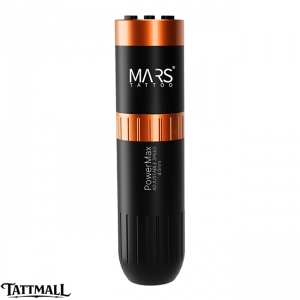
-300.jpg "MARS Intelli Wireless Tattoo Machine 4mm Stroke (Dual Batteries)")


