There are no products to list in this category.
Tattoo Machine Technology Explained
Posted By Tattmall on Thursday 27th August 2026
Tattoo Machine Technology Explained
Understanding tattoo machine technology helps artists choose equipment based on performance rather than marketing language. In the U.S. market, tattoo machines range from traditional coil models to rotary systems, wireless devices, and digitally controlled equipment. Although designs differ, the basic objective remains the same: convert electrical or mechanical energy into controlled needle movement. Machine technology influences speed, force delivery, stroke behavior, vibration, noise, weight, battery performance, and maintenance requirements. A modern
tattoo pen machine
combines several of these engineering elements in a compact handheld design, making technical knowledge increasingly useful for professional artists and equipment buyers.
The motor or electromagnetic system is the core power source of a tattoo machine. Traditional coil machines use electromagnetic coils to repeatedly attract and release an armature mechanism, producing rapid reciprocating motion. Rotary machines generally use an electric motor and a mechanical drive system to convert rotational movement into linear needle motion. Each approach creates a different operating feel. Coil tattoo machines are known for their distinctive mechanical action and adjustable setup characteristics, while rotary tattoo devices often provide smoother movement and simpler mechanical structures. A pen-style rotary tattoo device typically integrates the motor and drive mechanism into a cylindrical body, creating a compact alternative to traditional frame-based machines.
Needle movement depends heavily on the drive mechanism and stroke length. Stroke length generally refers to the distance traveled by the drive mechanism during one movement cycle. However, stroke length alone does not determine how a machine performs on skin. Motor characteristics, drive geometry, needle configuration, voltage or speed settings, grip technique, skin condition, and artist movement all influence the final result. A longer mechanical stroke may produce a different operating feel from a shorter one, but there is no universal setting that is automatically best for lining, shading, or color packing. Machine performance should be evaluated as a complete system rather than by one specification alone.
Voltage, speed, and frequency are related but should not be treated as identical measurements. On many electrically powered tattoo machines, voltage controls the electrical input provided to the system, while the resulting motor speed and needle movement depend on the specific motor and machine design. Two machines operating at the same voltage may not produce identical needle behavior. This is why artists should avoid copying voltage settings from one model directly to another. A professional rotary tattoo machine should be adjusted according to its own specifications, the installed needle cartridge, the intended technique, and the manufacturer's recommendations. Understanding the relationship between power input and mechanical output is more useful than simply choosing the highest available setting.
Needle cartridges have become an important part of modern tattoo machine technology. Cartridge systems can simplify needle changes by allowing compatible needle modules to be installed and removed more efficiently than many traditional setups. Different cartridge configurations are designed for different artistic tasks, including fine lines, larger lines, shading, soft gradients, and color work. However, compatibility is not universal. Cartridge dimensions, membrane systems, locking mechanisms, and recommended operating conditions can vary between manufacturers. Artists should confirm that a particular tattoo machine, grip, and cartridge system are designed to work together. The machine and needle cartridge should be considered a matched operating system, not unrelated components.
Wireless technology has changed how tattoo machines are powered and managed. Earlier machines commonly depended on external power supplies and cables, while many current rotary devices integrate rechargeable battery packs into the machine body. This design can improve mobility and reduce cable interference around the workstation. A wireless tattoo pen machine may also include a digital display for battery information and supported operating settings. However, battery integration introduces additional engineering considerations, including battery capacity, voltage stability, heat management, charging protection, weight distribution, and long-term battery aging. Cordless convenience is valuable, but professional users should evaluate battery performance alongside motor quality and ergonomics.
Battery management systems are critical to the reliability of wireless tattoo equipment. Rechargeable batteries require protection against conditions such as overcharging, excessive discharge, overheating, and other electrical abnormalities. A well-designed battery system may also provide information about remaining power and charging status. Over time, however, rechargeable batteries naturally lose capacity. Battery lifespan can be affected by charging habits, operating temperature, storage conditions, and the quality of the cells and protection circuitry. A reliable tattoo pen machine should be designed so that its electrical system supports stable operation without creating unnecessary complexity for the artist.
Ergonomics and vibration control are also important areas of tattoo machine engineering. Artists may hold a machine for extended periods, making weight, balance, grip diameter, surface texture, and vibration important factors. Even a powerful motor can create a poor user experience if the machine is difficult to control or causes unnecessary hand fatigue. Manufacturers may use balanced rotating components, damping materials, precision bearings, and optimized internal structures to reduce unwanted vibration. A pen-style tattoo machine can offer a familiar cylindrical grip, but the placement of the battery and motor affects its center of gravity. Good tattoo machine technology should improve control while reducing unnecessary physical strain.
Heat management is another essential part of reliable machine design. Motors, batteries, electronic control systems, and mechanical friction can all generate heat during extended operation. Some temperature increase may occur during normal use, but excessive heat can affect comfort, component longevity, and system reliability. Manufacturers can manage heat through efficient motor selection, optimized electronics, suitable materials, and internal thermal design. Artists should also avoid blocking ventilation areas where applicable or operating equipment outside recommended conditions. If a machine becomes unusually hot, develops an unusual smell, loses power, or behaves unpredictably, use should stop until the cause has been identified. Consistent performance depends on controlling both mechanical and electrical stress.
Digital controls are making tattoo equipment more programmable. Advanced machines may include digital screens, memory presets, adjustable operating modes, Bluetooth connectivity, mobile applications, firmware updates, or diagnostic functions. These features can help artists save preferred configurations and monitor equipment status. However, digital technology should support the tattooing process rather than make basic operation unnecessarily complicated. A machine should remain understandable and dependable even when advanced features are not needed. For connected equipment, manufacturers must also consider software compatibility, data privacy, and cybersecurity. Smart features are valuable only when they improve reliability, control, or workflow efficiency.
Machine materials influence durability, weight, and long-term maintenance. Aluminum alloys are widely used because they can provide a useful balance between weight and strength, while other metals or engineered materials may be selected for particular structural or thermal requirements. Internal shafts, bearings, cams, and other moving parts require precise manufacturing because small dimensional differences can influence vibration and mechanical consistency. Surface coatings may improve appearance or corrosion resistance, but coatings should not be considered a substitute for sound engineering. A durable tattoo machine depends on material selection, manufacturing precision, and assembly quality working together.
Firmware is becoming increasingly relevant for electronically controlled tattoo machines. Firmware is embedded software that manages certain functions inside the device, such as displays, battery monitoring, supported controls, or communication with companion applications. Updates may improve stability or correct software problems, but they must be properly tested for the specific hardware model. Manufacturers should provide clear instructions and reliable recovery procedures in case an update fails. This is especially important when a connected rotary tattoo pen relies on software for advanced functions. As tattoo equipment becomes more digital, software support becomes part of overall product quality.
Maintenance technology is just as important as operating technology. Modern machines can reduce maintenance requirements, but no mechanical device is completely maintenance-free. Artists should inspect equipment regularly for loose components, damaged threads, unusual noise, declining battery performance, or inconsistent operation. Cleaning methods must follow the manufacturer's instructions because electronic machine bodies may not be suitable for immersion or aggressive chemicals. Single-use needle cartridges should be handled and disposed of according to applicable safety requirements and manufacturer instructions. Correct maintenance protects both machine performance and professional workflow reliability.
The future of tattoo machine technology will likely focus on greater efficiency, consistency, and intelligent monitoring. Smaller motors, improved battery technology, more efficient electronic control systems, wireless connectivity, and advanced sensors could continue to influence equipment development. Future devices may provide more detailed diagnostic information, maintenance reminders, or adaptive control features. However, advanced technology should not eliminate professional judgment. The artist remains responsible for equipment selection, safe setup, needle choice, technique, and compliance with applicable hygiene requirements. A high-tech tattoo pen machine may provide better information and control, but it cannot replace training or artistic skill.
For American artists, choosing tattoo equipment should involve balancing technical specifications with real-world usability. Motor type, stroke design, compatible needle systems, battery performance, ergonomics, vibration, heat control, maintenance requirements, warranty support, and software reliability can all influence the ownership experience. The best machine is not necessarily the one with the longest feature list or highest numerical specifications. Instead, it should provide predictable performance for the artist's preferred techniques and working style. Technical specifications are useful, but consistent real-world performance is what ultimately defines a professional tattoo machine.
In conclusion, tattoo machine technology is the result of mechanical engineering, electrical design, materials science, battery technology, ergonomics, and increasingly, software development. Coil and rotary systems use different methods to generate needle movement, while modern wireless equipment adds battery management and digital control to the overall design. Understanding these systems helps artists evaluate machines more intelligently and avoid relying entirely on advertising claims. As the industry continues to develop, tattoo pen machine designs will likely become more efficient, connected, and customizable. The most successful equipment, however, will continue to follow the same principle: reliable technology should make professional tattooing more controlled, comfortable, and consistent.
FAQ
1. What is the main difference between a coil and rotary tattoo machine?
The primary difference is how they generate movement. Coil machines use electromagnetic coils and an armature mechanism, while rotary machines generally use an electric motor and mechanical drive system to create reciprocating needle motion.
2. Does a longer stroke always provide better tattoo performance?
No. Stroke length affects the mechanical behavior and feel of the machine, but performance also depends on motor characteristics, needle configuration, power settings, technique, skin condition, and the specific application.
3. Are wireless tattoo machines as powerful as corded machines?
They can provide suitable professional performance, but actual results depend on the specific motor, battery system, electronics, and machine design. Wireless operation alone does not determine machine power or quality.
4. Why do tattoo machines use different voltage settings?
Different machines have different motors, electronics, and mechanical designs. The same voltage can produce different operating behavior on different models, so settings should not automatically be copied from one machine to another.
5. What technical factors should I check before buying a tattoo machine?
Consider motor or drive type, stroke characteristics, compatible needle cartridges, power system, battery performance, weight, balance, vibration, heat management, materials, maintenance requirements, warranty, and software support where applicable.
Related Products
-
-300.jpg "MARS Stroke Mini Wireless Tattoo Machine 2.5/2.9/3.3/3.7mm Stroke (Dual Batteries)")
MARS Stroke Mini Wireless Tattoo Machine 2.5/2.9/3.3/3.7mm Stroke (Dual Batteries)
-
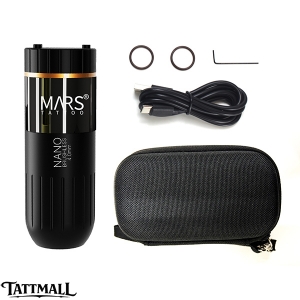
MARS NANO short battery pen MARS Nano Wireless Tattoo Pen Machine 4mm Stroke
-
-300.jpg "MARS Hestia MARS Hestia Wireless Tattoo Machine PMU Battery Tattoo Pen 3.5mm Stroke (Dual Batteries)")
MARS Hestia MARS Hestia Wireless Tattoo Machine PMU Battery Tattoo Pen 3.5mm Stroke (Dual Batteries)
-
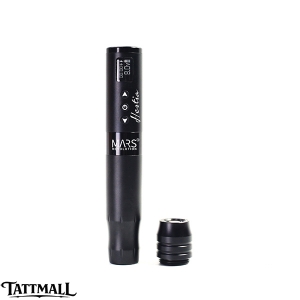
MARS Hestia MARS Hestia Wireless Tattoo Machine PMU Battery Tattoo Pen 3.5mm Stroke


