There are no products to list in this category.
Tattoo Needle Configurations
Posted By Tattmall on Thursday 10th September 2026
Tattoo Needle Configurations
Understanding tattoo needle configurations is essential for choosing the right needle setup for different tattoo styles. A tattoo needle configuration refers to how individual needle pins are grouped, arranged, and soldered onto a needle bar or cartridge. The configuration affects how ink is delivered, how wide the working area is, and how the needle interacts with the skin. For tattoo artists in France, understanding these differences can make machine setup more predictable and help artists select appropriate equipment for lining, shading, color packing, and soft transitions. Although modern rotary and pen-style machines offer adjustable settings, the configuration of the needle remains one of the most important factors influencing the final result. In everyday studio language, artists may also use terms such as needle grouping, needle setup, needle arrangement, or cartridge configuration to describe the same basic concept. A well-matched configuration helps connect the tattoo style, machine, ink flow, and desired visual effect.
What Does a Tattoo Needle Configuration Mean?
A tattoo needle configuration describes the number and arrangement of needle pins used together. Individual pins can be grouped into different patterns, and these patterns determine the shape of the needle tip that contacts the skin. For example, a small group of tightly arranged pins can create a relatively narrow line, while a wider arrangement can distribute pigment over a larger area. Configurations are commonly identified by the number of pins and their arrangement, such as 3RL, 5RL, 7M1, or 9RM. The first number generally indicates the number of needle pins, while the letters describe the grouping style. However, exact dimensions can vary between manufacturers, so a “7 magnum” from one brand may not behave identically to another manufacturer's version. Needle count alone does not tell the entire story; diameter, taper, spacing, soldering style, and configuration all influence performance.
Round Liner Configurations
Round liner configurations are primarily designed for controlled, defined lines. In an RL configuration, the pins are arranged closely in a circular formation, making the needle group relatively compact. Common examples include 3RL, 5RL, 7RL, and larger round liners. Smaller configurations can be useful when an artist needs fine details or delicate outlines, while larger groupings can produce broader and more substantial lines. The actual result also depends on the needle diameter, taper, machine stroke, hand speed, and technique. A round liner should therefore not be considered a universal “fine-line” solution simply because it has fewer pins. In French tattoo studios, where styles can range from traditional and illustrative work to minimalist and fine-detail tattoos, choosing an appropriate liner configuration should be based on the specific design rather than the label alone. Round liners are valued for precision because their compact arrangement concentrates pigment into a relatively narrow working zone.
Round Shader Configurations
Round shader configurations provide a more open grouping that can spread pigment more broadly than a round liner. RS configurations are commonly used for shading, soft lines, small areas of color, and controlled transitions. Examples include 5RS, 7RS, and 9RS. Because the pins are not packed as tightly as a typical round liner, a round shader can cover a wider area while still offering reasonable control. The final effect depends heavily on the artist's movement, machine characteristics, ink consistency, and skin response. Round shaders can be useful when an artist wants more pigment coverage than a liner without immediately moving to a large magnum configuration. Round shaders occupy a useful middle ground between narrow line work and broader shading applications.
Magnum Needle Configurations
Magnum configurations are widely associated with larger-scale shading and color packing. Magnum needles arrange multiple pins in rows, allowing pigment to be distributed across a comparatively broad surface. Common variations include M1, M2, and RM configurations. A standard magnum generally has two rows of pins, while a curved or round magnum has a curved arrangement intended to provide a softer edge. Stacked magnums place the pins more closely together than standard magnums, creating a denser configuration. These differences can affect how efficiently an artist covers larger areas and how smoothly gradients are created. Magnum groupings are particularly useful when the design requires efficient coverage, smooth shading, or larger areas of packed color.
Flat and Specialized Configurations
Flat configurations arrange needle pins in a line and are often selected for specific lining, shading, or geometric effects. Flat needles can create distinctive marks because the pins are arranged side by side rather than in a circular group. Some artists use them for bold lines, edges, or controlled shading depending on their technique. Beyond standard RL, RS, M1, M2, and flat configurations, manufacturers offer many specialized groupings, including curved magnums, bugpins, textured configurations, and other variations. Bugpin configurations typically use smaller-diameter pins and can provide a denser-looking needle arrangement while retaining a relatively narrow overall group. Specialized needle groupings give experienced artists more control when a conventional configuration does not produce the desired texture or pigment distribution.
Diameter, Taper, and Needle Arrangement Matter
Configuration is only one part of a tattoo needle's performance. Needle diameter describes the thickness of each individual pin, while taper describes how the pin narrows toward its tip. Common diameter categories include sizes such as 0.25 mm, 0.30 mm, and 0.35 mm, although manufacturers offer many other specifications. A longer taper can create a different ink-delivery and marking behavior from a shorter taper, even when the overall configuration is identical. Pin spacing also matters: two configurations with the same number of pins may produce noticeably different results if one is tightly packed and the other is more spread out. When comparing needle groupings, artists should consider pin diameter, taper, spacing, configuration, and manufacturer specifications together rather than focusing only on needle count.
How Configurations Work With Tattoo Machines
The tattoo machine and needle configuration need to work as a complete system. Modern rotary and pen-style machines commonly support cartridge-based needle systems, while some traditional machines use needle bars and tubes. Machine stroke length, operating voltage, needle depth, hand speed, and machine give can all influence how a particular configuration performs. A larger magnum, for example, may require a different approach from a small round liner because it contacts a broader area and distributes pigment differently. Wireless machines can provide additional freedom of movement, but they do not eliminate the need to match the configuration with the machine and technique. There is no single “best” needle configuration for every tattoo machine or tattoo style; compatibility and technique are equally important.
Choosing the Right Configuration for Different Styles
The best configuration depends on the visual result rather than simply the tattoo category. Fine details and precise outlines may call for smaller round liners, while bold traditional outlines can benefit from larger liner groupings. Small-area shading can be handled with round shaders, whereas broad gradients and large color fields are commonly approached with magnum configurations. Realism, black-and-grey, traditional, neo-traditional, Japanese-inspired, ornamental, and minimalist tattoos can all require different combinations. Artists should also consider the size of the tattoo, the placement, the desired texture, and the amount of pigment coverage required. Experienced artists usually build a versatile selection of needle groupings instead of relying on one configuration for every job.
Hygiene, Cartridges, and Studio Practice in France
Single-use tattoo needles and cartridges should be handled according to applicable hygiene requirements and the manufacturer's instructions. Cartridge systems are popular because the needle grouping is enclosed within a disposable cartridge body, which can simplify setup and help reduce handling of the needle assembly. However, a cartridge does not make a tattoo procedure automatically safe; appropriate hygiene, preparation, disposal, and cross-contamination controls remain essential. French tattoo professionals should follow current French and European hygiene requirements applicable to their practice and use products from reliable manufacturers. Artists should also inspect packaging before use and avoid products that appear damaged, contaminated, or improperly sealed. Good needle selection should always be accompanied by disciplined studio hygiene and responsible single-use practices.
How Should Beginners Build a Needle Selection?
Beginners should start with a practical range of common configurations instead of purchasing every available grouping. A basic selection might include several round liners for different line weights, a couple of round shaders for controlled shading, and several magnums for broader shading and color work. As artists gain experience, they can compare different diameters, tapers, pin spacing, and specialized configurations to determine which combinations suit their technique. Keeping notes about machine settings, needle groupings, ink behavior, and results can also make future setup decisions more consistent. Learning how different configurations behave is more valuable than simply collecting a large number of needle types.
Conclusion
Understanding tattoo needle configurations gives artists greater control over line quality, shading, texture, and pigment coverage. Round liners are generally associated with defined lines, round shaders with controlled shading, and magnums with broader shading and color packing, while flat and specialized groupings provide additional creative options. The final performance depends on more than configuration alone: diameter, taper, spacing, machine characteristics, technique, ink, and skin all play a role. For tattoo professionals in France, selecting dependable equipment and maintaining appropriate hygiene practices are equally important. Whether using a traditional needle-bar setup or a modern cartridge-compatible pen machine, the goal is to choose a configuration that matches the intended artistic effect. Choosing the right tattoo needle setup is ultimately about understanding how needle geometry and machine performance work together.
5 FAQs About Tattoo Needle Configurations
1. What is the most common tattoo needle configuration?
Round liners, round shaders, and magnums are among the most widely used configurations. The best choice depends on the tattoo style and the artist's technique.
2. What does 5RL mean?
5RL generally means five pins arranged as a round liner. The exact diameter, taper, and spacing can vary between manufacturers.
3. Are magnum needles only for shading?
No. Magnum configurations are commonly used for shading and color packing, but experienced artists may use them in different ways depending on their technique and the desired visual texture.
4. What is the difference between RL and RS needles?
RL means round liner and normally has a tighter circular grouping for defined lines. RS means round shader and generally has a more open grouping for shading and broader marks.
5. Should beginners buy many different needle configurations?
Not necessarily. A small selection of commonly used liners, shaders, and magnums is usually more practical. Beginners can expand their range after learning how different diameters, tapers, and groupings affect their work.
Related Products
-
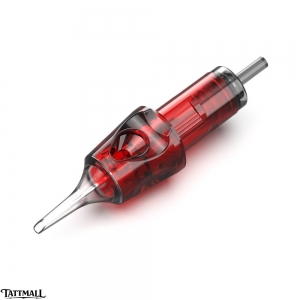
CNC Police 304 Stainless Steel Round Liner RL Tattoo Cartridge Needles 20PCS
-
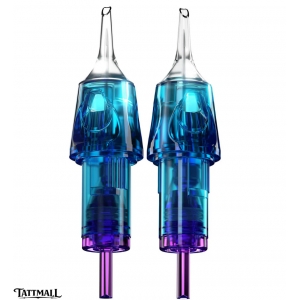
CNC Dimension 304 Stainless Steel Round Liner RL Tattoo Cartridge Needles 20PCS
-
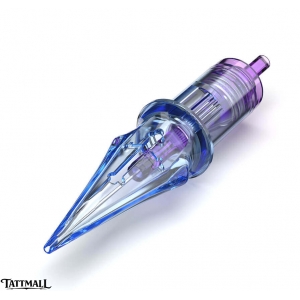
The King's Swords 304 Stainless Steel Round Liner RL Tattoo Cartridge Needles 20PCS
-
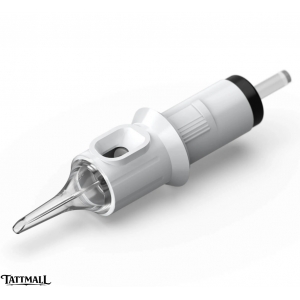
Quelle 304 Stainless Steel Needles Round Liner RL Tattoo Cartridge 20PCS


