There are no products to list in this category.
Tattoo Needle Guide
Posted By Tattmall on Tuesday 16th June 2026
Tattoo Needle Guide
Choosing the correct tattoo needle specification is one of the most important decisions in professional tattooing. While machine quality, artist technique, and tattoo ink all contribute to the final result, the needle remains the component that directly interacts with the skin. A well-selected tattoo needle can improve line precision, shading smoothness, pigment saturation, and healing quality. In the growing Middle Eastern tattoo market, artists are increasingly seeking professional guidance on needle configurations to meet rising client expectations. Understanding how different needle sizes, groupings, and tapers function can help artists create better tattoos while minimizing skin trauma and improving efficiency.
Needle diameter is the foundation of tattoo needle selection. Most modern tattoo needle cartridges and needle groupings are manufactured in several standard diameters, commonly ranging from approximately 0.25 mm to 0.35 mm. Smaller diameters are often favored for detailed work because they produce finer lines and allow more precise pigment placement. Larger diameters typically deliver more ink with each pass, making them suitable for bold outlines and solid color packing. Professional artists often select different needle diameters based on the style of the tattoo rather than relying on a single configuration. Understanding diameter differences helps maximize the performance of every
tattoo needle
setup.
Needle grouping determines how ink is delivered into the skin. Tattoo needles are rarely used individually. Instead, multiple needles are arranged into specific formations designed for different tattooing techniques. Round liners are commonly used for outlining, while round shaders support softer shading effects. Magnum groupings are widely preferred for color packing and large-area shading because they cover more surface area efficiently. Curved magnums, sometimes called soft-edge magnums, provide smoother transitions and reduce visible edge marks. Choosing the appropriate tattoo needle cartridge configuration allows artists to match the tool to the artistic objective rather than forcing one setup to perform every task.
Taper length significantly influences precision and ink flow. Taper refers to the distance from the thick part of the needle to the sharpened tip. Short tapers generally deposit more pigment quickly and are often used for solid saturation work. Long tapers create finer penetration characteristics and support smoother gradients, detailed line work, and realistic tattoo styles. Many experienced artists in the Middle East use multiple needle taper options throughout a single project. Modern tattoo cartridge needles are available in various taper lengths, providing flexibility for artists working across multiple tattoo styles.
Different tattoo styles require different needle specifications. Fine-line tattoos, script tattoos, geometric designs, and micro-realism work typically benefit from smaller needle groupings and finer diameters. Traditional bold tattoos often require larger liner configurations capable of producing strong, consistent outlines. Black-and-gray realism frequently relies on magnum needle groupings that create smooth shading transitions and controlled pigment distribution. Artists specializing in color realism often combine several tattoo needle cartridge types to achieve both precision and saturation. Selecting needle specifications based on artistic style improves efficiency while enhancing final results.
Skin type should also influence needle selection. Not all skin responds identically during tattooing. Thicker skin may tolerate larger needle groupings and stronger pigment delivery, while more delicate skin may benefit from finer configurations and lighter application techniques. Professional artists evaluate factors such as skin texture, elasticity, age, and tattoo placement before selecting a needle setup. Using the wrong tattoo needle specification can increase unnecessary trauma, slow healing, or reduce color consistency. A personalized approach often produces better long-term outcomes for clients.
Quality is just as important as needle size or configuration. Even the ideal specification may perform poorly if manufacturing quality is inconsistent. High-quality tattoo needle cartridges are engineered with precise soldering, accurate alignment, and reliable sterilization standards. Poorly manufactured needles can create excessive vibration, unstable ink flow, and uneven penetration. Many professional studios throughout the Middle East invest in premium needle systems because consistency directly influences tattoo quality and client satisfaction. Reliable tattoo needle modules help artists focus on technique rather than compensating for equipment limitations.
Modern cartridge systems have simplified needle selection and workflow management. Traditional needle setups often required extensive assembly and adjustment. Today, cartridge tattoo needles provide convenient, pre-sterilized solutions that allow artists to switch configurations quickly during a session. This flexibility is particularly valuable when working on complex designs that require outlining, shading, and color packing within the same appointment. Professional artists frequently maintain a selection of liner, shader, and magnum cartridges to accommodate different creative requirements efficiently.
Beginners should avoid selecting needles based solely on popularity. Many new artists purchase the same needle configurations recommended by others without fully understanding their intended applications. While certain needle groupings are versatile, no single setup is ideal for every tattoo style. Developing an understanding of diameter, taper, grouping, and skin interaction allows artists to make informed decisions. Building experience with multiple tattoo needle configurations helps improve technical skills and broadens artistic capabilities over time.
In conclusion, selecting the correct tattoo needle specification requires balancing artistic goals, skin characteristics, tattoo style, and equipment quality. Diameter, taper, grouping, and cartridge design all influence how pigment enters the skin and how the finished tattoo appears. For artists serving the expanding Middle Eastern tattoo market, investing time in understanding tattoo needle systems can improve tattoo quality, client comfort, and professional confidence. Whether working with fine-line needle cartridges, magnum shading needles, or traditional liner configurations, choosing the right tattoo needle remains one of the most important decisions in professional tattooing.
FAQ
1. Which tattoo needle is best for beginners?
Round liners and medium-sized magnum cartridges are often recommended because they provide versatility for practicing outlines and shading.
2. What needle size is commonly used for fine-line tattoos?
Smaller diameter needles and small round liner groupings are typically preferred for fine-line and detailed tattoo work.
3. Are magnum needles better for shading?
Yes. Magnum needle configurations are widely used for smooth shading and efficient color packing across larger areas.
4. Does taper length affect tattoo quality?
Yes. Longer tapers generally provide greater precision and smoother shading, while shorter tapers often deliver stronger pigment saturation.
5. How many needle types should a professional artist keep?
Most professionals maintain several liner, shader, and magnum configurations to accommodate different tattoo styles and skin types.
Related Products
-
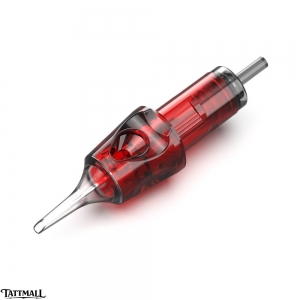
CNC Police 304 Stainless Steel Round Liner RL Tattoo Cartridge Needles 20PCS
-
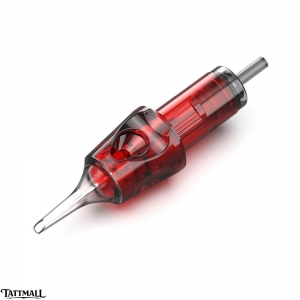
CNC Police 304 Stainless Steel Round Shader RS Tattoo Cartridge Needles 20PCS
-
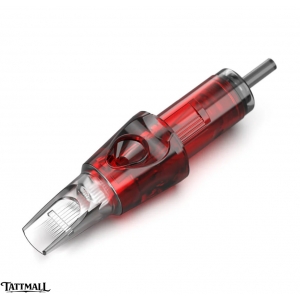
CNC Police 304 Stainless Steel Round Magnum RM Tattoo Cartridge Needles 20PCS
-
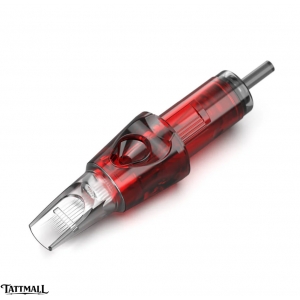
CNC Police 304 Stainless Steel Weaved Magnum M1 Tattoo Cartridge Needles 20PCS


