There are no products to list in this category.
Tattoo Needle Size for Beginners
Posted By Tattmall on Monday 28th September 2026
Tattoo Needle Size for Beginners
Choosing the right tattoo needle size is one of the first technical decisions a beginner needs to understand. A cartridge labeled 1005RL, for example, contains several pieces of information rather than simply identifying a “small” or “large” needle. The first part commonly indicates the individual needle diameter, the middle number identifies the needle count, and the letters describe the configuration. T-Tech explains that 08, 10, and 12 commonly correspond to approximately 0.25 mm, 0.30 mm, and 0.35 mm diameters, while RL identifies Round Liner and M1 identifies Magnum. (T-Tech Tattoo) For beginners, understanding these three elements—diameter, grouping, and configuration—is more useful than memorizing one supposedly universal starter size.
Understanding Needle Diameter
Needle diameter refers to the thickness of each individual needle in the grouping, not the overall width of the cartridge. In commonly used tattoo cartridge coding, #08 is approximately 0.25 mm, #10 is approximately 0.30 mm, and #12 is approximately 0.35 mm. Smaller diameters can be useful for finer detail and delicate work, while larger diameters generally provide a different ink-flow and pigment-delivery characteristic. (T-Tech Tattoo) Beginners should avoid assuming that a smaller diameter is automatically easier or better. A finer needle can require more precise control, while a larger needle may feel more substantial and suit bolder work. The correct choice depends on the configuration, tattoo style, machine, ink, technique, and working area.
Is 0.30 mm a Good Starting Point?
For many beginners, #10 or approximately 0.30 mm is a practical diameter to learn with because it sits between very fine and relatively heavy needle options. It can be found across common configurations and provides a versatile starting point for learning basic linework and shading. Some industry guides describe #10 as a popular middle option for detail, lining, and soft shading, while #08 is positioned toward finer work and #12 toward heavier applications. (Baltik Body Art) However, there is no officially designated “beginner needle size.” Training, machine control, hand speed, skin knowledge, hygiene, and supervised practice matter far more than choosing one particular diameter. A beginner should select equipment appropriate to the design and follow the specifications of the cartridge manufacturer rather than treating #10 as a universal rule.
Choosing a Round Liner Size
Round Liner (RL) configurations are generally the most relevant starting point for learning controlled outlines and linework. Common examples include 3RL, 5RL, and 7RL, with smaller groupings providing a narrower working footprint and larger groupings producing broader lines. TattooBase lists 1RL–3RL for fine-line and micro-detail work, 5RL for standard outlines, and 7RL–9RL for bolder linework. (TattooBase) For a beginner learning conventional outlining, a 5RL or 7RL can be easier to understand than immediately working with extremely fine configurations. But needle count alone does not determine line width. Diameter, taper, needle spacing, machine movement, and technique all influence the final mark.
Choosing Round Shader Sizes
Round Shader (RS) configurations are designed for shading and smaller-area filling rather than conventional precision outlining. Common examples include 5RS, 7RS, and 9RS. Smaller RS groupings can be useful for compact shading areas and details, while larger configurations can cover more surface. The distinction between RL and RS is based on the arrangement of the needle points: RL groupings are tighter, while RS groupings are more open. (CREDITECH MED) Beginners learning basic shading may benefit from understanding RS after becoming comfortable with their primary liner configuration. This also demonstrates why tattoo needle size should never be considered independently from needle configuration: two cartridges with the same number of points can behave differently when their arrangement, diameter, or taper changes.
What About Magnum Needles?
Magnum configurations are generally intended for broader shading, color packing, and larger working areas. M1, RM, and CM are common configuration labels encountered in cartridge systems, although terminology and exact construction can vary between manufacturers. M1 is commonly associated with a multi-row magnum arrangement, while RM or CM may indicate a curved or round magnum profile. (T-Tech Tattoo) A beginner does not necessarily need a large collection of magnums on day one. The appropriate grouping depends on the type of work being learned. Someone studying broad black-and-grey shading may have different equipment needs from someone learning small illustrative tattoos or traditional-style designs. Building a collection gradually makes it easier to understand how each configuration behaves.
Needle Count vs Needle Diameter
One of the most common beginner mistakes is confusing needle count with needle diameter. A code such as 1005RL can be read, using a common coding system, as approximately 0.30 mm diameter, five needle points, and Round Liner configuration. A 1205RL would have the same five-point configuration but a larger individual needle diameter of approximately 0.35 mm. T-Tech and other cartridge references show this general coding structure, although manufacturers can use different labeling systems. (T-Tech Tattoo) This distinction is important because changing either diameter or count can change the working characteristics. When ordering cartridge needles, beginners should read the complete specification instead of searching only for “5RL” or “7RL.”
Taper Also Matters
Taper describes the shape and length of the needle point and can influence how the grouping delivers pigment and interacts with the skin. Two cartridges with the same diameter, count, and configuration can still feel different if their taper differs. Some manufacturers identify short, medium, long, or extra-long taper options, while others use their own naming conventions. T-Tech, for example, uses additional labeling to distinguish taper length in its cartridge system. (T-Tech Tattoo) Beginners should therefore treat diameter, count, configuration, and taper as four separate specifications. Looking at only one number on the package can give an incomplete picture of what the cartridge is designed to do.
Matching Needle Size With a Tattoo Machine
The cartridge is only one part of the tattooing system, and its performance also depends on the machine being used. Modern rotary and pen-style tattoo machines commonly work with cartridge systems, but compatibility should always be confirmed with the machine and cartridge manufacturer. Stroke characteristics, machine weight, motor response, grip design, and the artist's hand movement can all affect how a particular grouping feels. A cartridge that works comfortably in one rotary machine may feel different in another machine even when the label is identical. Beginners comparing tattoo machines should therefore consider cartridge compatibility, adjustable features, ergonomics, power requirements, and manufacturer documentation rather than choosing a machine solely because it has a high advertised voltage range or motor specification.
A Practical Beginner Selection
A simple beginner setup can focus on a small range of versatile configurations instead of buying every available cartridge. For example, an artist learning standard linework might explore a 5RL or 7RL in a commonly used diameter, then add a 5RS or 7RS for small-area shading. A medium magnum can be added later when the artist begins practicing broader shading or color packing. The exact sizes should be selected according to the training program, tattoo style, machine, and manufacturer specifications. This gradual approach also makes it easier to compare how different needle groupings behave. Keeping notes about configuration, diameter, taper, machine settings, and results can help beginners understand their equipment more systematically.
Common Beginner Mistakes
The biggest mistake is believing that a specific needle size can automatically produce a specific tattoo result. Needle selection affects the tool's behavior, but it does not replace machine control or proper technique. Another common mistake is buying cartridges based only on needle count while ignoring diameter and taper. Beginners may also assume that every cartridge fits every pen-style machine, which is not necessarily true. Cartridge compatibility should always be verified before use. Finally, tattooing is an invasive procedure, so beginners should receive appropriate professional training and follow applicable U.S. state and local health requirements, manufacturer instructions, and safe single-use practices. Needle size cannot compensate for inadequate hygiene or training.
Final Guide
There is no single best tattoo needle size for every beginner, but a versatile medium diameter combined with common configurations can make the learning process easier to understand. Many beginners can start by learning the differences between RL for linework, RS for smaller shading, and M1 or RM for broader work. A commonly encountered #10/0.30 mm diameter can be a useful reference point, while #08/0.25 mm and #12/0.35 mm provide additional options for different applications. (T-Tech Tattoo) As experience grows, artists can experiment with different needle counts, tapers, and configurations instead of relying on one fixed setup. Ultimately, tattoo needle size is only one part of the equation; the machine, cartridge design, technique, tattoo style, and working area all need to work together.
FAQs
1. What tattoo needle size is best for beginners?
There is no universal best size, but #10 or approximately 0.30 mm is a practical middle diameter to learn about because it is available across common configurations. The right choice still depends on the configuration and type of work being practiced.
2. Should beginners start with 3RL, 5RL, or 7RL?
5RL or 7RL can be useful starting points for learning conventional linework because they provide more working surface than extremely fine liners. Fine-line work may require smaller configurations, while bold traditional work can require larger groupings.
3. What do 08, 10, and 12 mean on tattoo needles?
They commonly indicate individual needle diameter: 08 is approximately 0.25 mm, 10 is approximately 0.30 mm, and 12 is approximately 0.35 mm. (T-Tech Tattoo) Always verify the manufacturer's specifications because labeling systems can vary.
4. Is a smaller tattoo needle always better for beginners?
No. Smaller-diameter needles can be useful for fine details, but they can also demand precise control. A beginner should choose the configuration appropriate to the design and learn proper machine and hand control rather than automatically choosing the smallest available needle.
5. Do needle sizes work with every tattoo machine?
Not necessarily. Many modern cartridge systems are designed for rotary or pen-style machines, but cartridge compatibility should be confirmed with the specific machine and manufacturer. Machine stroke, grip, cartridge fit, and overall setup can all affect performance.
Related Products
-
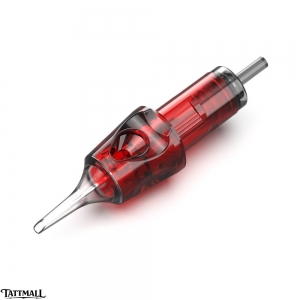
CNC Police 304 Stainless Steel Round Liner RL Tattoo Cartridge Needles 20PCS
-
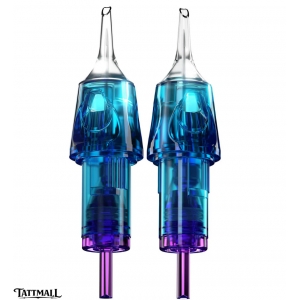
CNC Dimension 304 Stainless Steel Round Liner RL Tattoo Cartridge Needles 20PCS
-
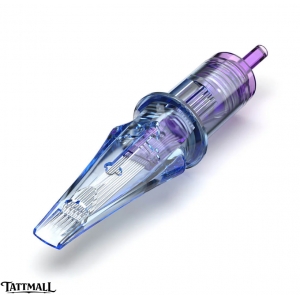
The King's Swords 304 Stainless Steel Round Magnum RM Tattoo Cartridge Needles 20PCS
-
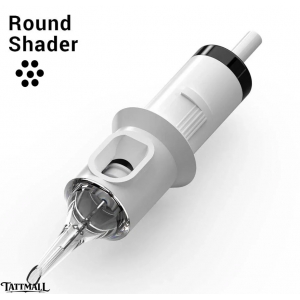
Quelle 304 Stainless Steel Needles Round Shader RS Tattoo Cartridge 20PCS


