There are no products to list in this category.
Tattoo Needles vs Cartridges
Posted By Tattmall on Monday 07th September 2026
Tattoo Needles vs Cartridges
Tattoo needles and tattoo cartridges are related, but they are not exactly the same component. In professional tattooing, the word “needle” usually refers to the individual needle points or the assembled needle grouping that performs the work, while a cartridge generally refers to a complete, enclosed module containing the needle assembly and supporting components. This distinction is particularly useful for tattoo artists in France, where both traditional equipment and modern cartridge-based machines can be found in professional studios. Understanding the difference can make it easier to select compatible supplies, plan a workflow, and compare different tattoo machine systems. For modern studios, tattoo cartridges offer convenience, while traditional needle assemblies can provide a more direct and customizable setup.
Traditional tattoo needles are normally assembled as part of a larger needle-bar system. In conventional machines, individual needle points are soldered or otherwise fixed into configurations such as round liners, round shaders, flats, or magnums. The resulting needle grouping is attached to a needle bar, which connects to the machine's moving mechanism. The artist can therefore work with a system where the needle grouping, tube, grip, and machine are separate components. A traditional needle setup gives experienced artists considerable control over how the components are selected and assembled. This approach has been used for decades and remains relevant for artists who prefer classic coil machines, reusable grips, or particular equipment configurations.
Tattoo cartridges combine the needle grouping with a compact housing designed for compatible machines and grips. Instead of manually assembling a needle bar and tube, an artist can install a compatible cartridge directly into a cartridge-compatible machine. Inside the housing are the needle points and supporting components, and many modern cartridges also incorporate a membrane system designed to help limit fluid movement toward the machine. The exact internal construction varies by manufacturer. The main advantage of a cartridge is that it integrates several components into one replaceable unit. This can simplify equipment changes, particularly when an artist needs to switch between different needle configurations during a tattoo session.
The biggest practical difference is therefore the overall system rather than the metal needle points themselves. A cartridge can contain essentially the same basic needle grouping categories found in traditional systems, including liners, shaders, and magnums. The difference is that the cartridge packages the grouping inside a standardized housing. A traditional needle bar, by comparison, requires separate compatible components and assembly. Tattoo cartridges are best understood as a complete needle module, whereas traditional tattoo needles are often part of a manually assembled system. This distinction is important when comparing equipment because the terms are sometimes used interchangeably in online stores even though they describe different levels of the product.
Cartridge systems are particularly popular with rotary and pen-style tattoo machines. Many modern machines are designed specifically to accept disposable cartridges, allowing artists to change configurations quickly without rebuilding their entire needle setup. For example, an artist might begin a tattoo with a round liner for detailed outlines, switch to a round shader for smaller shaded areas, and then use a magnum cartridge for larger sections. Quick configuration changes are one of the strongest practical benefits of cartridge-based equipment. This can improve workflow efficiency and reduce the amount of time spent changing components between different stages of a tattoo.
Traditional needle systems still have important advantages for artists who prefer customization and a classic working method. With a traditional setup, experienced professionals can select individual components and configure their equipment according to personal preferences. Coil-machine users in particular may value the ability to fine-tune their machine, tube, grip, needle bar, and needle grouping as a complete system. This approach can require more preparation and technical knowledge than using cartridges. Traditional needle assemblies can offer greater hands-on customization, while cartridge systems generally prioritize convenience and consistency. Neither system is automatically superior; the appropriate choice depends on the machine, technique, studio workflow, and artist's experience.
Needle configuration remains important regardless of whether the artist chooses traditional needles or cartridges. Round liners are commonly associated with outlines and fine details, round shaders can be used for controlled shading, and magnum configurations are often selected for broader shading and colour work. The number of points, diameter, taper, spacing, and grouping shape can all influence how a configuration performs. A cartridge does not eliminate these differences—it simply packages the selected configuration into a replaceable module. Choosing the correct needle configuration is more important than choosing cartridges simply because they are newer or more convenient. Artists should match the configuration to the design and their preferred technique.
Cartridge quality also depends on more than the visible needle grouping. The housing needs to fit securely into the compatible grip or machine, while the internal components should provide stable needle movement. Many professional cartridges use membranes intended to reduce the risk of fluids travelling backward into the machine, although the exact design differs among manufacturers. Alignment, manufacturing consistency, membrane performance, and housing tolerances can all affect the working experience. A high-quality cartridge is an engineered component rather than simply a needle placed inside a plastic shell. French tattoo studios should therefore consider specifications and manufacturer information instead of choosing products based only on price.
Hygiene and single-use practices are another major difference between modern cartridge systems and traditional equipment. Many tattoo cartridges are manufactured as sterile, single-use components and are disposed of after the procedure according to appropriate sharps and infection-control procedures. Traditional needle systems can involve separate reusable components, but any reusable equipment that contacts the client must be processed using appropriate cleaning, disinfection, sterilisation, and handling procedures. The exact legal and professional requirements can vary by location. The convenience of disposable cartridges does not replace the need for proper infection-control procedures. French artists should follow applicable national, regional, and professional requirements for tattooing and sharps disposal.
Compatibility is one of the most important factors when purchasing tattoo cartridges. Not every cartridge will fit every tattoo machine or grip, even when products appear similar. Artists should check the machine manufacturer's specifications and confirm that the cartridge system is compatible with the grip, needle drive, and intended equipment. Some machines may also require particular cartridge dimensions or drive mechanisms. A cartridge should always be selected as part of a compatible machine-and-grip system. Buying a cartridge solely because its needle configuration looks correct can lead to poor fit or inconsistent performance.
The choice between traditional needles and tattoo cartridges often comes down to workflow, equipment, and personal preference. Artists who value rapid configuration changes may prefer cartridges, particularly when working with modern rotary or pen-style machines. Artists who enjoy traditional equipment and detailed machine adjustment may continue to prefer needle-bar systems. Some professionals use both approaches depending on the project. A flexible studio can benefit from understanding both systems rather than treating one as a universal replacement for the other. The best choice depends on how the artist works, what equipment is available, and what level of customization is required.
For the French market, product reliability and responsible sourcing should also be considered alongside technical performance. Professional artists should look for clear product specifications, secure packaging, consistent manufacturing, and suitable compatibility information. Where sterile disposable components are used, packaging integrity should be checked before use. Used cartridges and needles should be handled as contaminated sharps and disposed of through appropriate channels. Reliable supplies support both professional workflow and responsible studio management. Artists should also stay informed about local hygiene requirements because regulatory expectations can differ between jurisdictions.
In conclusion, tattoo needles and tattoo cartridges are not competing names for exactly the same product. A tattoo needle or needle grouping describes the working needle configuration, while a cartridge is a complete replaceable module that contains the needle assembly and supporting components. Traditional systems offer hands-on customization, while cartridge systems provide convenience, fast changes, and integrated construction. Tattoo cartridges can be an efficient choice for modern professional workflows, but the right system depends on the artist, machine, technique, and studio requirements. Understanding this distinction allows French tattoo professionals to make more informed equipment decisions and select needle configurations based on actual artistic needs rather than marketing terminology.
FAQ
1. Are tattoo needles and tattoo cartridges the same thing?
No. A tattoo needle refers to the individual needle points or their grouping, while a cartridge is a complete replaceable module that contains the needle assembly and supporting components.
2. Are tattoo cartridges better than traditional needles?
Not necessarily. Cartridges offer convenience and quick configuration changes, while traditional systems can provide greater hands-on customization. The better choice depends on the artist's machine and working style.
3. Which machines use tattoo cartridges?
Many modern rotary and pen-style tattoo machines are designed for cartridge systems. However, compatibility varies, so artists should check the machine and grip manufacturer's specifications before purchasing.
4. Can one cartridge be used for lining and shading?
Some cartridge systems offer configurations suitable for both types of work, but a liner and shader are designed differently. Professional artists usually select specific configurations according to the tattooing task.
5. Are tattoo cartridges single-use?
Many professional tattoo cartridges are designed as sterile, single-use products. Artists should follow the manufacturer's instructions and applicable local infection-control and sharps-disposal requirements.
Related Products
-
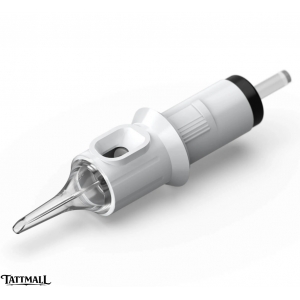
Quelle 304 Stainless Steel Needles Round Liner RL Tattoo Cartridge 20PCS
-
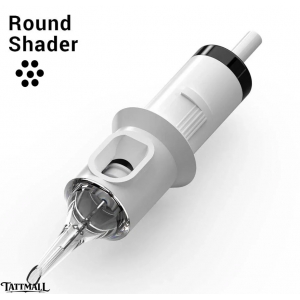
Quelle 304 Stainless Steel Needles Round Shader RS Tattoo Cartridge 20PCS
-
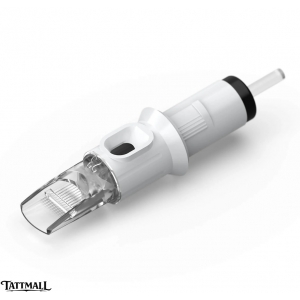
Quelle 304 Stainless Steel Needles Round Magnum Softedge RM Tattoo Cartridge 20PCS
-
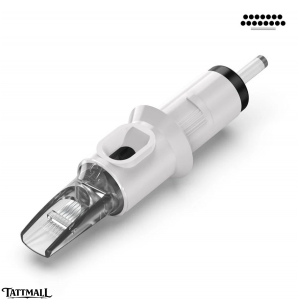
Quelle 304 Stainless Steel Needles Weaved Magnum M1 Tattoo Cartridge 20PCS


