There are no products to list in this category.
Types of Tattoo Needles
Posted By Tattmall on Thursday 03rd September 2026
Types of Tattoo Needles
Tattoo needle types are designed for different artistic tasks, from precise outlines and fine details to soft shading and large areas of colour. For professional tattoo artists and studios across Europe, understanding the differences between needle configurations is an important part of selecting compatible equipment and building an efficient workflow. Modern tattooing uses individual needle points arranged into specific groupings, with variations in count, diameter, taper, spacing, and shape. These details can influence how a needle configuration feels during use and what type of visual effect it is suited to create. While machine performance and artist technique remain essential, the needle assembly is the direct working component that interacts with the skin. Choosing suitable tattoo needles can therefore affect precision, coverage, consistency, and overall workflow. As the European tattoo market continues to develop, artists are increasingly comparing not only basic needle categories but also cartridge quality, manufacturing consistency, membrane design, and compatibility with professional tattoo equipment.
Round liner needles are primarily associated with outlines, lettering, and detailed tattoo work. In a round liner configuration, multiple needle points are grouped closely together in a circular pattern. This arrangement can help create defined lines and controlled details. The number of points in the grouping generally affects the potential line width, with smaller configurations commonly used for finer details and larger configurations supporting stronger or wider lines. However, needle count alone does not determine the final result. Needle diameter, taper, machine movement, pigment properties, skin characteristics, and artist technique can all influence line appearance. Round liner configurations are often chosen for fine-line designs, script tattoos, geometric work, and traditional outlines, depending on the artist's preferred setup. A round liner is best understood as a precision-oriented needle grouping rather than a universal solution for every type of line work. Modern cartridge versions make it easier for artists to switch between different liner configurations during a session, although compatibility and product quality should always be considered.
Round shader needles are designed for controlled shading, small colour areas, and selected detail work. Compared with closely packed liner groupings, round shaders generally use a configuration that is more suitable for broader pigment distribution. They may be used for soft shading, small areas of colour packing, and black-and-grey work where the artist wants controlled coverage without using a wide magnum grouping. These needle groupings can also be useful in smaller designs or areas where access is limited. The exact behaviour depends on the specific configuration and manufacturer design. Some artists may prefer compact round shading assemblies for controlled saturation, while others may use them for building darker areas gradually. Round shader configurations offer a balance between detail control and moderate surface coverage. Their versatility makes them a common category in professional tattoo supply systems, especially for artists who work across multiple styles.
Flat needles use a straight-line arrangement that can support defined shading and colour application. In a flat configuration, individual needle points are positioned side by side rather than in a circular grouping. This structure can provide a broader contact pattern and may be useful for certain shading techniques, geometric forms, or controlled colour placement. Flat needle groupings are available in different sizes, allowing artists to choose narrower or wider arrangements depending on the intended area of work. Because the configuration creates a different working surface compared with round groupings, hand movement and machine setup may need to be adjusted accordingly. Flat tattoo needle configurations can provide efficient coverage while maintaining directional control. Although they may be less frequently discussed than round liners or magnums, they remain useful tools for artists whose techniques benefit from a linear needle arrangement.
Magnum needles are commonly used when artists need to work across larger areas of shading or colour. Magnum configurations usually contain multiple rows of needle points, allowing them to cover a wider area than many round or flat groupings. They are frequently associated with black-and-grey shading, colour packing, gradients, and larger tattoo designs. Different magnum designs can create different contact patterns. Traditional stacked magnums may position the rows more closely together, while other configurations provide wider spacing or a curved arrangement. The goal is not simply to increase coverage speed. Artists select magnum-style tattoo needle assemblies because the grouping can support particular shading and saturation techniques. Magnum configurations are designed to combine broader coverage with controlled pigment placement. The appropriate size depends on the artwork, the working area, the artist's technique, and the desired level of precision.
Curved magnum or soft-edge magnum needles represent an important variation within modern shading configurations. In these designs, the outer needle points are arranged so that the contact edge follows a softer or curved profile rather than forming a completely straight line. This can create a different interaction pattern when the artist works across the skin and may support smoother transitions depending on technique and equipment setup. Curved magnums are commonly selected for gradients, soft shading, and larger black-and-grey or colour areas. However, they are not automatically superior to standard magnums. Some artists prefer flatter configurations for certain techniques because they offer a different sense of control. The choice between standard and curved magnum groupings depends on the desired visual effect and the artist's working method. Testing compatible configurations is often more useful than relying only on general product descriptions.
Needle diameter is another important factor that helps distinguish tattoo needle types. The diameter refers to the thickness of each individual needle point, and manufacturers may offer multiple diameter options within the same grouping category. A smaller diameter can support a different level of precision and pigment delivery compared with a larger diameter, but neither option is universally better. The appropriate choice depends on the tattoo style, pigment characteristics, machine setup, and artist preference. For example, an artist working on highly detailed line work may prefer a different diameter from an artist covering a large colour area. Needle diameter should be selected as part of a complete setup rather than treated as an isolated performance specification. Manufacturing tolerances are also important because inconsistent diameters or poor alignment can affect predictable performance.
Taper length further expands the range of tattoo needle configurations available to professional artists. The taper is the sharpened section near the tip of the needle, and different products may use shorter, medium, or longer taper designs. These differences can influence how the needle enters the skin and how the artist experiences the working response. Longer tapers are often associated with more gradual points and can be selected for detailed or controlled work, while shorter tapers may provide a different working feel. However, terminology is not always perfectly standardized across every manufacturer, so artists should review product specifications rather than assuming that identical names always represent identical dimensions. Taper design is one of the details that can influence precision, working feel, and equipment selection.
The middle of modern tattoo practice increasingly involves cartridge-based needle systems rather than traditional fixed needle assemblies. Cartridge technology allows artists to install different needle configurations into compatible grips and machines, making it easier to switch between lining, shading, and colour work. A professional may begin a session with a fine liner, change to a shader for tonal areas, and then select a magnum configuration for broader coverage. This flexibility can simplify workflow, but cartridge compatibility must be checked carefully. Different manufacturers may use different tolerances, membrane designs, or construction methods. Reliable tattoo needles are not defined only by their grouping; cartridge stability, compatibility, and manufacturing quality also influence professional performance. Artists should follow manufacturer recommendations and avoid assuming that every cartridge will perform identically in every machine or grip system.
Cartridge membranes and internal safety features are also important when comparing modern tattoo needle products. Many professional cartridges include membrane systems intended to help limit the movement of fluids toward the machine or grip. The quality and design of these components can vary, making it important to select products from reliable suppliers and use them according to manufacturer instructions. A poorly constructed cartridge may create problems with stability, movement, or equipment compatibility. Packaging integrity is equally important for products intended for single-use professional applications. A modern tattoo needle cartridge is a complete engineered component, not simply a collection of metal needle points. Artists and studios should therefore evaluate both the visible needle grouping and the internal construction of the cartridge.
Tattoo needle selection should always be connected to the style and scale of the artwork. Fine-line tattoos may require precise liner configurations, while bold traditional work can benefit from larger grouping choices. Black-and-grey realism often involves multiple shading configurations, including round shaders and magnums, while colour tattoos may require different groupings for edges, small areas, and broader saturation. An experienced artist may therefore use several types of tattoo needle cartridges during a single session. The best choice is influenced by the design, body placement, required detail, intended visual effect, machine characteristics, and the artist's technique. There is no single “best” tattoo needle type because different configurations are designed to solve different artistic and practical problems.
For European tattoo studios, product quality, hygiene management, and supply reliability are just as important as the technical category of the needle. Professional artists often require consistent access to compatible consumables and clear product information. Packaging should remain intact until use, and single-use components should be handled and disposed of according to applicable local requirements and professional hygiene procedures. European markets may have different national or regional requirements, so studios and suppliers should stay informed about the rules relevant to their location. Reliable manufacturers can support professional workflows by providing clear specifications, batch information where applicable, and consistent product quality. Professional needle selection combines technical performance with responsible purchasing and handling practices.
The future of tattoo needle development is likely to focus on greater precision, improved cartridge engineering, and more efficient production. Manufacturers are continuing to improve needle alignment, cartridge stability, membrane design, and manufacturing consistency. At the same time, professional users are showing greater interest in products that are easy to identify, compatible with widely used systems, and available through reliable supply channels. Environmental concerns may also encourage companies to reduce unnecessary packaging and improve material efficiency where possible without compromising hygiene or product performance. Future innovation will depend on balancing precision, safety, compatibility, and practical sustainability.
In conclusion, the different types of tattoo needles exist because tattooing requires different levels of precision, coverage, and artistic control. Round liners are commonly used for outlines and detail, round shaders can support controlled shading and smaller colour areas, flat configurations provide a different contact pattern, and magnum groupings are widely used for broader shading and colour work. Diameter, taper, needle count, spacing, and cartridge construction add further variation to these categories. For professional artists across Europe, understanding these differences makes it easier to select compatible equipment and create an efficient workflow. The best tattoo needles are not necessarily the largest, smallest, or most expensive—they are the configurations that match the artwork, equipment, professional technique, and intended use.
FAQ
1. What are the main types of tattoo needles?
The main categories include round liners, round shaders, flat needles, standard magnums, and curved or soft-edge magnums. Each category is designed to support different forms of lining, shading, detail work, or colour application.
2. What are round liner needles used for?
Round liners are mainly used for outlines, fine lines, lettering, and detailed tattoo work. The number of needle points, diameter, taper, and artist technique can influence the final appearance of the line.
3. What is the difference between a round shader and a magnum?
Round shaders are generally used for more controlled shading and smaller areas, while magnum configurations are designed to cover broader areas. The best choice depends on the design, technique, and working area.
4. Are curved magnum needles better than standard magnums?
Not necessarily. Curved or soft-edge magnums create a different contact profile that may suit smooth shading, while standard magnums may be preferred for other techniques. The best option depends on artist preference and the intended visual effect.
5. How do I choose the right tattoo needle?
Choose according to the type of work you are doing, such as lining, detail, shading, or colour application. You should also consider grouping size, diameter, taper, cartridge compatibility, machine setup, product quality, and applicable professional hygiene practices.
如果你下一篇还想继续做“纹身针系列SEO文章”,可以直接继续下一个主题,例如 “What Is the Difference Between RL and RS Tattoo Needles?”、“What Are Magnum Tattoo Needles Used For?” 或 “How to Choose Tattoo Needle Size?”。
Related Products
-
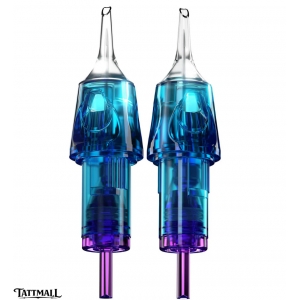
CNC Dimension 304 Stainless Steel Round Liner RL Tattoo Cartridge Needles 20PCS
-
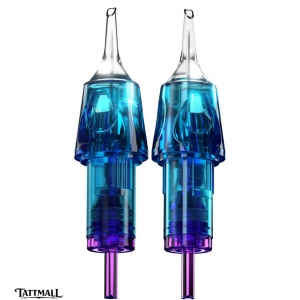
CNC Dimension 304 Stainless Steel Round Shader RS Tattoo Cartridge Needles 20PCS
-
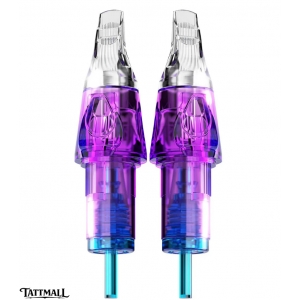
CNC Dimension 304 Stainless Steel Round Magnum RM Tattoo Cartridge Needles 20PCS
-
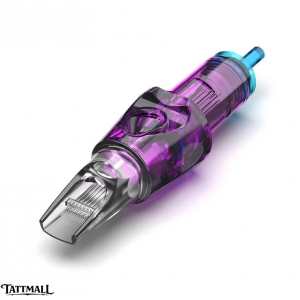
CNC Dimension 304 Stainless Steel Weaved Magnum M1 Tattoo Cartridge Needles 20PCS


