There are no products to list in this category.
Tactile Feedback in Tattoo Machines
Posted By Tattmall on Monday 10th August 2026
Tactile Feedback in Tattoo Machines
Tactile feedback technology is emerging as a promising way to improve how tattoo artists interact with modern equipment. Traditional tattooing depends heavily on the artist’s hands, eyes, experience, and ability to interpret subtle changes in machine vibration and skin resistance. A tattoo machine does not normally provide explicit information about what is happening at the needle tip, so artists develop a sense of control through years of practice. Newer concepts in smart tattoo equipment aim to make this interaction more informative by using vibration patterns, pressure sensing, motor feedback, or other forms of haptic communication. A modern tattoo pen machine could potentially use these technologies to communicate operating conditions directly through the artist’s hand, making machine control more intuitive without replacing professional judgment.
Tactile feedback means using physical sensations to communicate information to the user. In consumer electronics, haptic feedback is already common in smartphones, game controllers, wearable devices, and other interactive products. A device may create a short vibration to confirm an action or change its vibration pattern to communicate different information. In tattoo equipment, the same general principle could be adapted to communicate machine conditions. Instead of relying only on a digital display, an advanced tattoo device might provide subtle vibration signals when a setting changes, the battery becomes low, the motor reaches an unusual temperature, or operating conditions become unstable. This approach could be particularly useful during a tattoo session because an artist can receive information without constantly looking away from the working area.
Mechanical vibration is already an important part of the traditional tattooing experience, but it should not be confused with true intelligent haptic feedback. Rotary and coil machines naturally generate different vibration characteristics because of their motor, mechanism, stroke, and operating speed. Experienced artists often learn to recognize these sensations and use them as part of their technique. However, natural machine vibration is not necessarily designed as a communication system. Intelligent haptic feedback would intentionally control vibration or other physical signals to communicate specific information. This distinction is important when evaluating claims about “smart” tattoo equipment and future tattoo pen machine technology.
Pressure and resistance sensing could make tactile feedback significantly more useful. During tattooing, the interaction between the needle, cartridge, skin, and hand movement changes continuously. A sensor-based machine could theoretically monitor motor load or other measurable operating conditions and convert selected changes into controlled feedback. For example, a system might detect a significant increase in resistance and provide a subtle vibration warning. Such information could help an artist recognize unusual operating conditions without relying entirely on visual indicators. However, machine resistance is influenced by many variables, including needle configuration, stroke length, voltage, hand speed, skin characteristics, and technique. Therefore, tactile feedback should be treated as an additional information channel rather than a direct measurement of skin depth or tattoo quality.
One potential application is improving machine control during different tattooing techniques. Lining, shading, blending, and color packing place different demands on equipment and require different combinations of machine settings and hand movement. A smart rotary machine could potentially provide distinct haptic signals for different operating modes. For example, a short vibration could confirm a mode change, while another pattern could indicate that the selected operating parameters have been reached. This could make a professional
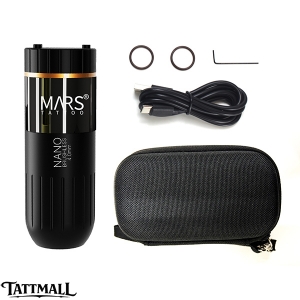
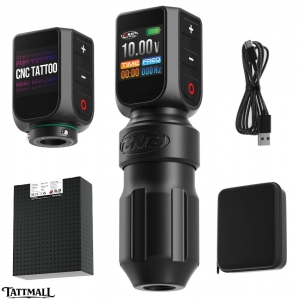
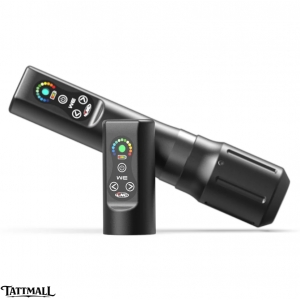
tattoo pen machine
easier to operate during long sessions, especially when the artist needs to maintain visual concentration on the tattoo rather than repeatedly checking a screen.
Tactile feedback could also improve battery and maintenance awareness. Wireless tattoo machines depend on rechargeable batteries, and artists need to monitor remaining power during appointments. Traditional systems may use a screen, indicator light, or audible alert to show battery status. Haptic notifications could provide another option, such as a brief vibration when battery capacity reaches a predefined level. Similar feedback could potentially indicate excessive operating temperature, charging problems, or other machine conditions. For busy American tattoo studios, these small improvements could help reduce interruptions because artists could receive important notifications while maintaining their normal working position.
Ergonomics will determine whether haptic technology is genuinely useful or simply adds unnecessary complexity. Tattoo artists often work for several hours, and excessive vibration can contribute to hand fatigue rather than improve control. This creates an important engineering challenge: the feedback signal must be strong enough to recognize but subtle enough not to interfere with the artist’s normal hand movement. Manufacturers therefore need to distinguish between the machine’s normal operating vibration and intentionally generated feedback. A well-designed tattoo pen machine should provide controlled information without creating additional discomfort or masking the natural mechanical feel that experienced artists rely on.
Software may become an important component of future haptic tattoo equipment. If a machine contains sensors and a digital control system, software could determine when feedback should be activated and what pattern should be used. Artists might eventually be able to customize notification strength, duration, or vibration patterns through a mobile application. Different professionals could select different feedback preferences depending on their technique and workflow. However, excessive customization could also make equipment unnecessarily complicated. The most useful systems will likely focus on a small number of meaningful notifications rather than attempting to communicate every measurable parameter through vibration.
Haptic feedback could also support training and skill development, but it should not replace hands-on education. Beginners must learn how needle movement, hand speed, machine settings, and skin interaction affect tattoo results. A smart device might provide additional feedback about machine operation, helping new users understand how parameter changes influence equipment behavior. Nevertheless, tattooing involves practical skills that cannot be learned solely through electronic indicators. Skin preparation, hygiene, needle selection, client communication, artistic technique, and safe working practices remain essential. Haptic technology should therefore function as an educational and operational aid rather than an automated substitute for professional training.
Safety is another major consideration when developing tactile feedback systems. A vibration warning should never encourage an artist to make an unsafe adjustment during an active procedure. Machine manufacturers would need to ensure that feedback signals are accurate, predictable, and resistant to false alarms. If sensors provide unreliable information, unnecessary warnings could distract the artist or create confusion. In addition, any electronic system must be designed to operate reliably around cleaning procedures, moisture, protective barriers, and normal studio conditions. The technology should support safe professional practice rather than introduce another potential failure point.
Compatibility with existing equipment will influence the adoption of haptic technology. Many tattoo artists already own rotary machines, wireless batteries, power supplies, grips, and cartridge systems that they prefer. If tactile feedback requires completely proprietary equipment, adoption may be slower. A more practical approach could involve integrating sensors and haptic actuators into existing machine architectures while maintaining familiar cartridge connections and ergonomic dimensions. This could allow future professional equipment to introduce smart features without forcing artists to completely change their established workflows.
The strongest potential benefit of tactile feedback is faster access to information without visual distraction. Tattoo artists must continuously observe line placement, shading transitions, pigment saturation, and the overall design. Looking down at a screen to check voltage, battery status, or operating mode can interrupt concentration. Haptic notifications provide information through another sensory channel, potentially allowing the artist to remain focused on the tattoo. This is particularly attractive for wireless rotary devices and advanced tattoo pen machine systems designed around compact, ergonomic controls.
However, tactile feedback should not be marketed as a direct indicator of tattoo quality or skin condition unless properly validated. The sensation generated by a machine is not equivalent to a clinical measurement of tissue response. Skin varies significantly between individuals and body locations, and tattoo outcomes depend on numerous factors. A vibration alert cannot determine whether pigment has been placed perfectly or whether a specific skin area is suitable for a particular technique. Professional artists should continue relying on training, observation, appropriate equipment settings, and established hygiene and safety practices.
The future of tactile tattoo technology will likely involve a combination of sensors, intelligent motors, software, and ergonomic design. Instead of simply making a machine vibrate more strongly, manufacturers may develop systems that distinguish normal operating vibration from deliberately generated haptic signals. Sensor data could potentially be processed in real time, allowing the device to provide useful alerts while minimizing unnecessary feedback. Advances in compact electronics and battery technology may make these features easier to integrate into wireless rotary machines without significantly increasing weight.
For the American tattoo market, practical value will ultimately determine whether haptic technology becomes mainstream. Professional artists are likely to prioritize reliability, comfortable handling, consistent needle performance, battery life, easy maintenance, and compatibility before purchasing a machine simply because it offers smart features. Tactile feedback will therefore need to solve real workflow problems rather than function as a novelty. If manufacturers can develop reliable systems that communicate important information without distracting the artist, haptic technology could become a meaningful feature in the next generation of professional tattoo equipment.
In conclusion, tactile feedback has promising potential for improving interaction between tattoo artists and intelligent tattoo machines, but the technology is still better viewed as an emerging development than a universal industry standard. Controlled vibration, pressure-related sensing, battery alerts, temperature notifications, and customizable feedback could make future equipment more informative and user-friendly. A well-engineered tattoo pen machine could use haptic technology to complement the artist’s natural sense of touch while reducing the need to constantly check digital displays. The most successful designs will combine intelligent feedback with ergonomic comfort, reliable performance, strong safety standards, and the practical needs of professional tattoo artists.
FAQ
1. What is tactile feedback in a tattoo machine?
Tactile feedback uses controlled physical sensations, usually vibration, to communicate information to the artist. Unlike ordinary machine vibration, intelligent haptic feedback is intentionally generated for a specific purpose, such as confirming a setting or warning about an equipment condition.
2. Can tactile feedback measure tattoo needle depth?
Not necessarily. A haptic system may detect certain machine or motor conditions, but that does not mean it can accurately measure needle depth in skin. Needle depth depends on machine configuration, needle exposure, hand movement, skin characteristics, and other factors.
3. Can haptic feedback reduce tattoo artist fatigue?
Potentially, but the design is critical. Useful feedback could reduce the need to look at a screen, but excessive or poorly controlled vibration could increase hand fatigue. Ergonomic design must therefore remain a priority.
4. Will tactile feedback replace traditional tattoo machine controls?
It is unlikely to completely replace conventional controls. Haptic feedback is more useful as an additional information channel that works alongside physical buttons, digital displays, voltage controls, and other machine settings.
5. Is tactile feedback already standard on professional tattoo machines?
No. Advanced electronic and wireless tattoo equipment continues to develop, but intelligent tactile feedback is not yet a universal standard across professional tattoo machines. Its future adoption will depend on reliability, practical benefits, artist acceptance, and successful product development.
-300.jpg "MARS Stroke Mini Wireless Tattoo Machine 2.5/2.9/3.3/3.7mm Stroke (Dual Batteries)")