There are no products to list in this category.
Touchscreen vs Buttons of the professional tattoo machines
Posted By Tattmall on Monday 08th June 2026
Touchscreen vs Buttons
Choosing between touchscreen controls and mechanical buttons has become an important consideration when purchasing modern tattoo machines. As tattoo technology continues to evolve across the Middle East, manufacturers are integrating increasingly sophisticated user interfaces into their equipment. Traditional mechanical buttons have been trusted for decades because of their simplicity and reliability, while touchscreens offer advanced functionality, customization, and a modern user experience. For artists investing in
professional tattoo machines,
understanding the strengths and weaknesses of each control system is essential for selecting equipment that matches their workflow, studio environment, and long-term operational needs.
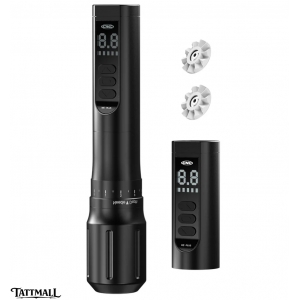
Mechanical buttons remain popular because of their reliability and tactile feedback. Physical buttons provide a clear response when pressed, allowing artists to adjust settings without looking directly at the machine. During a tattoo session, this tactile confirmation can be valuable because artists often focus entirely on skin contact, needle movement, and design accuracy. Mechanical controls are also less affected by moisture, gloves, or accidental touches. Many experienced professionals working with premium tattoo equipment continue to prefer button-based systems because they offer consistent operation and straightforward functionality. In demanding studio environments, simplicity often translates into reliability.
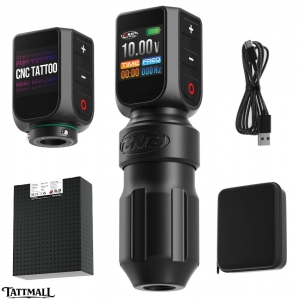
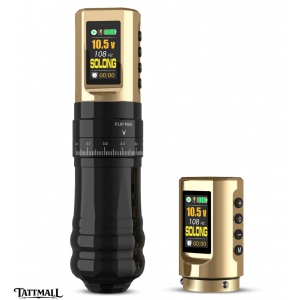
Touchscreen interfaces offer a higher level of customization and information display. Modern touchscreens can present voltage settings, battery status, session timers, stroke configurations, memory presets, and operational data on a single display. Instead of cycling through menus with physical buttons, artists can access settings quickly through intuitive graphical interfaces. Many manufacturers of professional tattoo machines have adopted touchscreens because they allow more advanced features without increasing the number of external controls. This makes modern tattoo devices more versatile while maintaining a clean and minimalist appearance.
Ease of cleaning and hygiene considerations affect both systems differently. Hygiene standards are extremely important in the tattoo industry, particularly in professional studios throughout the Middle East. Touchscreen surfaces are typically smooth and seamless, reducing the number of crevices where dust, ink residue, or contaminants can accumulate. Mechanical buttons, by contrast, may contain small gaps around moving components that require more careful cleaning. However, physical buttons are often sealed against moisture and designed to withstand repeated disinfection. When evaluating studio-quality tattoo machines, artists should consider how frequently equipment will be cleaned and which design best supports their hygiene protocols.
Environmental conditions can influence control-system performance. The Middle East is known for high temperatures, dry climates, and occasional dust exposure, factors that can affect electronic equipment over time. Mechanical buttons are generally resistant to accidental touches caused by sweat, gloves, or environmental interference. Touchscreens, while increasingly durable, may occasionally become less responsive if covered by protective films, moisture, or contaminants. High-end professional tattoo machines often use advanced touch technology specifically designed to operate reliably in challenging professional environments, but environmental conditions remain an important consideration for long-term use.
User experience varies significantly between touchscreen and button-based systems. Younger artists who are familiar with smartphones and digital devices often adapt quickly to touchscreen controls. They appreciate customizable interfaces, quick navigation, and visual feedback. Conversely, many veteran tattoo artists prefer mechanical controls because they are familiar, predictable, and easy to operate during active tattooing. Neither approach is inherently superior; the choice depends largely on individual working habits. Manufacturers of professional-grade tattoo machines increasingly recognize this diversity by offering both interface styles within their product ranges.
Durability and long-term maintenance are important factors when comparing the two technologies. Mechanical buttons contain moving parts that may eventually wear out after years of repeated use. However, replacement or repair is often relatively straightforward. Touchscreens eliminate physical wear from repeated button presses but rely on sensitive electronic components and display systems. If a touchscreen becomes damaged, repairs may be more expensive and complex. Many advanced tattoo systems use reinforced glass, waterproof sealing, and impact-resistant construction to improve touchscreen durability, yet long-term maintenance costs should still be considered when selecting among professional tattoo machines.
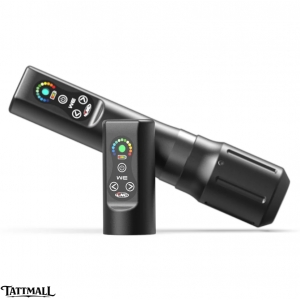
The future of tattoo machine design is likely to include both technologies rather than replacing one with the other. Many manufacturers now combine touchscreens with a limited number of physical buttons to provide the advantages of both systems. Hybrid interfaces allow artists to access advanced features while retaining quick tactile control for essential functions. This approach is becoming increasingly common among premium tattoo devices, commercial tattoo equipment, and high-performance rotary systems. By balancing convenience with reliability, hybrid designs help meet the needs of a diverse professional market.
Ultimately, the best control system depends on the artist’s priorities, workflow, and studio environment. Mechanical buttons excel in simplicity, tactile feedback, and operational reliability, while touchscreens provide enhanced customization, visual information, and modern functionality. For professionals working in the Middle East, environmental conditions, hygiene requirements, and long-term durability should all influence the decision. Whether selecting traditional controls or advanced digital interfaces, investing in high-quality professional tattoo machines ensures better performance, greater reliability, and a more efficient tattooing experience. As technology continues to advance, both control methods will remain valuable options within the evolving world of professional tattoo equipment.
FAQ
1. Are touchscreen tattoo machines more advanced than button-controlled models?
Generally yes, because they can display more information and offer additional customization features, but this does not automatically make them better for every artist.
2. Which is more reliable in hot Middle Eastern climates?
Mechanical buttons are often considered slightly more reliable under extreme environmental conditions, although modern touchscreens are becoming increasingly durable.
3. Are touchscreen tattoo machines harder to clean?
No. Smooth touchscreen surfaces are often easier to disinfect because they have fewer gaps and moving parts.
4. Do professional artists prefer touchscreens or buttons?
Preferences vary. Some artists prefer digital convenience, while others value the tactile feedback of physical controls.
5. Is a hybrid control system a good compromise?
Yes. Many premium tattoo machines combine touchscreens with essential physical buttons to provide both flexibility and reliability.